

Trump Goes After Don Lemon Over Minnesota Church Protest Coverage
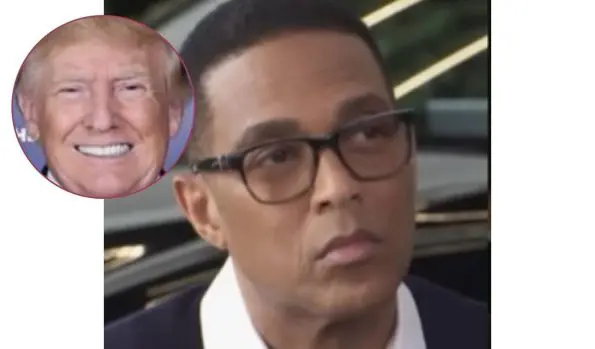
Trump Goes After Don Lemon Over Minnesota Church Protest Coverage
President Donald Trump escalated tensions surrounding a Minnesota church protest by amplifying calls for journalist Don Lemon to face punishment over his coverage of the incident. Trump reposted a message on Truth Social suggesting Lemon could be prosecuted, as the U.S. Department of Justice said it would pursue charges related to the protest.
The Justice Department announced it plans to move forward with charges connected to a Sunday morning protest that disrupted services at a St. Paul church. Assistant Attorney General for Civil Rights Harmeet Dhillon publicly singled out Lemon, arguing that journalism does not provide a “shield” from criminal liability and suggesting Lemon was aware of what was taking place inside the church.
While Dhillon stopped short of confirming whether Lemon himself would be charged, she pointed to potential enforcement under the Freedom of Access to Clinic Entrances Act and referenced the Enforcement Act of 1871 — also known as the Ku Klux Klan Act — a Reconstruction-era law designed to protect civil rights, including the right to vote and worship.
Lemon pushed back on the growing scrutiny, telling NBC News that the focus on him misses the broader point. “If this much time and energy is going to be spent manufacturing outrage, it would be far better used investigating the tragic death of Renee Nicole Good — the very issue that brought people into the streets in the first place,” he said.
Trump’s repost also revived debate over past enforcement of federal protest laws. The message referenced an abortion clinic incident, though details were unclear. In a separate case, several women in their 70s were sentenced to prison time for blocking access to a Washington, D.C., abortion clinic in 2020 — individuals Trump later pardoned shortly after beginning his second term.
As the Justice Department weighs its next steps and Trump continues to fuel the controversy, critics and supporters alike are questioning whether this marks a new line being drawn between journalism, protest coverage, and criminal liability — but is this about accountability, or a dangerous test of press freedom?

 Previous Article
 Next Article
 Federal Judge Orders Trump Administration To Restore White House Access To CNN, MS NOW & Politico
  Georgia’s Youngest Mayor Removed From Office After Allegedly Spending City Funds On Food, Haircuts, Clothing & Exchanging Explicit Texts With 18-Year-Old High School Student
  Barack & Michelle Obama Share Their Family Dog Sunny Has Passed Away
  Rev. Al Sharpton Won’t Apologize After Nolan Wells’ Friends Threat*n Defamation Suit Over Questions About His D*ath: ‘I Will Neither Be Silenced Nor Retract’
  Republican Rep. Lauren Boebert’s Adult Son Arrested, Facing Multiple Felony Charges Related To Alleged S3xual Exploitation Of A Child
 ![[Update] Ex-Tallahassee Mayor Andrew Gillum Locked Up Again After Allegedly Testing Positive For M*th During Court-Ordered Dr*g Screening](https://thejasminebrand.com/wp-content/uploads/2026/07/IMG_9225-scaled-620x600.jpeg) [Update] Ex-Tallahassee Mayor Andrew Gillum Locked Up Again After Allegedly Testing Positive For M*th During Court-Ordered Dr*g Screening
[Update] Ex-Tallahassee Mayor Andrew Gillum Locked Up Again After Allegedly Testing Positive For M*th During Court-Ordered Dr*g Screening  Sen. Mitch McConnell Released From Rehab Center Following Concerning Fall
  Atlanta Mayor Andre Dickens Criticizes Invest Fest Admission Prices: “You Charge A Lot For People To Go”