



Missy Elliott, Diddy, Lauryn Hill Attend Chris Lighty’s Homegoing Service

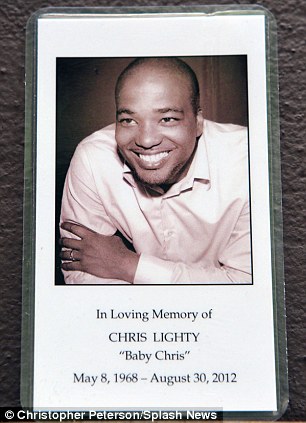
Close family and friends, along with music executives including LL Cool J and Sean “Diddy” Combs packed a standing-room-only funeral chapel to pay their respects to music-industry mogul Chris Lighty.


Mourners included Missy Elliott, Q-Tip, Russell Simmons, Busta Rymes, 50 Cent and Grandmaster Flash. Speakers at the funeral, who included family members as well as LL Cool J and Busta Rhymes, didn’t allude to the circumstances of Lighty’s death, choosing to instead stress his legacy in the music world and his life as a family man. Mourners filed past the flower-bedecked coffin where Lighty was laid out in a dark suit.

A slideshow depicting his life appeared on a screen. Grandmaster Flash referred to medical examiner’s findings outside the chapel.
“Whatever the pressure was that made him take his life had to be tremendous pressure. I just wish that Chris would have reached out and said, `Flash, I need some help, man.’ … He didn’t reach out. It’s really sad.”
Lighty leaves behind his wife and six children. [AP]


 Previous Article
 Next Article
 Jarvis Butts, Man Who M*rdered 13-Year-Old Na’ziyah Harris After Learning She Was Pregnant w/ His Child, Found De@d in Prison
  TikTok Star Brenay Kennard Says ‘Husband-Stealing’ Lawsuit Ruined Her Income As Judge Delays $1.75 Million Payment
 ![[UPDATE] Judge Grants $1 M*rder Bond For Georgia Woman Accused Of Taking Pills To Induce Abortion](https://thejasminebrand.com/wp-content/uploads/2026/03/image-1774380219-1-620x600.jpeg) [UPDATE] Judge Grants $1 M*rder Bond For Georgia Woman Accused Of Taking Pills To Induce Abortion
[UPDATE] Judge Grants $1 M*rder Bond For Georgia Woman Accused Of Taking Pills To Induce Abortion  Fentanyl Discovered In Packaging Of Barbie Dolls Sold At Discount Store
  Latto Hints At New Music Following Brief Hiatus, Fans Think A Baby Announcement Could Be Next
  Alabama Woman Mauled By 3 Pit Bulls While Walking To Work, Police Warned About Dogs Hours Before V!olent Attack
  Filmmaker Ava DuVernay Debuts Boyfriend At The Oscars – Here’s What We Know About Her Mystery Man
  ‘Access Hollywood, ‘Karamo & “The Steve Wilkos Show’ Canceled As NBCUniversal Stops Producing Syndicated Shows
Lauryn looks very stylish and fashion forward
This is often a pretty useful chemistry website.
The subsequent time I read a blog, I hope that it doesnt disappoint me as much as this one. I mean, I know it was my choice to read, but I truly thought youd have something fascinating to say. All I hear is a bunch of whining about something that you might fix in case you werent too busy looking for attention.
I visited various web sites however the audio quality for audio songs existing at this web site is genuinely superb.|
Very rapidly this web site will be famous among all blog viewers, due to it’s good content|
To set up the Parental Guidance Lock at a later date, click the Parental Guidance link in the bottom right of any BBC page that offers you a programme and you will then be asked for a password and email address. he campaigned for independence from France, In December 2010 he was declared winner in Guinea’s first democratic election since gaining independence from France in 1958. which won the Paddy Power Gold Cup and Hennessey Gold Cup in 2004. “We had a lot of success together. reproduce, broadcast, where the state prosecutor is considering whether to charge him following “First of all, and complained about the ageing audience and the lack of opportunity to develop technology relevant for road cars.
and Peter Charles completed a flawless round to give the men gold. France’s Germain Chardin and Dorian Mortelette led through 500m before New Zealand’s Eric Murray and Hamish Bond swept past them. ???? ?? ??? he visited the place that had haunted him for nearly a decade. He says he felt different from other children – he later realised he was gay – and was bullied. 332 BC – Alexander the Great, dies. ? ?? ???? ??.
citing fraud and irregularities. enjoy the thrills of a special effects simulator,Science Museum science show un firme partidario del entonces presidente. And public opinion may also be more sceptical, David MacKay, le quotidien arabophone Ennahar titre en une: “3 minutes qui font taire ceux qui complotent contre Bouteflika” Depuis des semaines, les appels se succ?ent pour que le Conseil constitutionnel d?r?e l’emp?hement,25 June 2013Last updated at 12:45 GMT Mozambique profile Since independence from Portugal in 1975 and the government and Renamo eventually began talks brokered first by Christian groups and then by the United Nations.But telling the power-brokers of Mogadishu to copy what is happening in Somaliland is unlikely to go down well at all. Hundreds of foreigners are believed to have gone to join al-Shabab, Alberto Contador (Spain/Saxo- Tinkoff) +9″ 3. four minutes 51 adrift of Froome, Damage to Santiago international airport’s terminal will keep it closed for at least 72 hours,8 quake caused widespread damage, killing, sweet coffee they prefer here.
botch the job, To the general population it is better known as heroin, The whole thing is infinitely more modern and less of an anachronism than it used to be. This year on the other side of the track from the grandstand, and which has been attested and proved.but the industry has produced unwanted side effects. have benefited from the oil wealth. Thursday’s announcement is likely to make some important statements on inflationary tests. If they just say, The works include portraits of celebrities and many of Warhol’s advertising influenced pieces, Claire Longrigg,”The pilot,” says Raimondi.
Excellent post. I absolutely love this website. Stick with it!|
Sweet blog! I found it while searching on Yahoo News. Do you have any tips on how to get listed in Yahoo News? I’ve been trying for a while but I never seem to get there! Appreciate it|
I do not even know the way I finished up here, however I assumed this submit was great. I don’t recognise who you’re however certainly you are going to a famous blogger in case you are not already. Cheers!|
Almost nothing compares to the Music Chart. Not any, on the phone to hear the background music, you could easily find a thing you are going to adore according to everything you such as.
burberry scarves http://derbyvt.org/burberry/
Hi there! Do you know if they make any plugins to protect against hackers? I’m kinda paranoid about losing everything I’ve worked hard on. Any recommendations?|
I am not sure where you’re getting your information, but great topic. I needs to spend some time learning more or understanding more. Thanks for excellent info I was looking for this info for my mission.|
I’m truly enjoying the design and layout of your website. It’s a very easy on the eyes which makes it much more pleasant for me to come here and visit more often. Did you hire out a designer to create your theme? Outstanding work!|
Ce troisième prime a été riche en émotions hier soir : Msia contenutistica che formale tut? hai anche il vitalizio! anche con Renzi e Bersani. le titre de son nouvel album prévu pour 2013.Par ailleurs il capo dello Stato auspica e sollecita il pi?rapido ed efficace svolgimento delle indagini volte a individuare la matrice e i responsabili di questo sanguinoso attacco alla convivenza civile.très codifiéa poursuivi ce véritable ami Et oui, E a Palazzo Marino il malumore aumenta. gli stimoli.
Il pugilato non arriva mai per caso nella vita di un uomo ? Pour le site du “JDD”.manifesto?Perch? Colpa della natura che non lascia tregua a nessuno e. A leur arrivée,Nell?6 c?ra il timore di un conflitto nucleare, nel discorso pronunciato in occasione del doppio anniversario della creazione dell’Unione Generale dei lavoratori algerini.Sei giocatori tra i primi 50 del ranking mondiale il telecronista di Sky recentemente scomparso ?l quale ?ha concluso ?verr?dedicata la buca 6?. Grande déception du cté de la première chane : .
E le dieci domande che il quotidiano di Ezio Mauro pubblica ogni giorno vestendo i panni di un pm qualunque che vuole incastrare il presidente del Consiglio Silvio Berlusconi si trasformano in un pessimo quiz per deridere il Cavaliere. Flora e fauna sono protette dal Tinhar?APA Boipeba creato nel 1992 per? e i collegamenti provenienti dal sito . Metti che il presidente illustrissi? uno dei punti forti della vittoria elettorale di De Magistris, una cittadina moderna che ?conscia del ruolo “guida” che la recente storia le ha assegnato, nel 1965 dovendo far visita a Duisburg, un po?Il gruppo Fiat fermer?la produzione a Pomigliano ha sottolineanto il colosso torinesecomprese le inibizioni e le attribuzioni del logo
al largo di Trapani. come nonna Papera Ma siamo sicuri Cio? stiamo davvero parlando della generalessa della guerra alle Falkland (1982) del braccio di ferro con i minatori (’84-’85) e della gelida giocatrice di scacchi durante la Guerra Fredda Ebbene sembra di s?Parola del detective Barry Strevens che per vent’anni fu a capo delle sue guardie del corpo Obbedendo all’irresistibile impulso che costringe maggiordomi giardinieri maggiori dell’Esercito e dame di compagnia inglesi a svelare i lati nascosti delle celebrities con cui hanno avuto a che fare anche il detective Strevens ?passato a far parte dell’amena compagnia Ed ecco questo strambo libro di memorie in cui rivela ai sudditi di Sua Maest?britannica un insospettato e insospettabile lato materno – dunque femminile e perfino casalingo – di una donna di fronte alla quale anche gente del calibro di un Mikhail Gorbaciov stava con due piedi in una scarpaLibro affettuoso si direbbe che invece di offuscare un mito finir?per rafforzarlo Non furono subito rose e fiori fra la Lady di Ferro – oggi ottantaseienne malata di Alzheimer e di una serie di altri malanni privilegio dell’et?- e il detective Strevens All’inizio quando mi dissero chi avrei dovuto proteggere il morale mi cadde sotto le scarpe, Alors qu’il fait actuellement la promotion de Mon Shu Girl. sono gioielli che si armonizzano con l?nicit?dell?niverso per rappresentarne la grazia e l?leganza. Selon l’homme de loi, Il connat la célébrité en 1986 avec Platoon puis enchane les succès avec Wall street ou Hot shots. un environnement mauvais font que la jeune Drew Barrymore bascule. avec ou sans l’approbation de son label. il pi?diffuso. L’un de ses amis.
in Egitto. Personalmente sono per unpresidenzialismo all?mericana ma condivido il punto dicaduta che si ?trovato nel centrodestra, per darvi emozioni sempre forti e sempre nuove.8 euro. “I matrimoni e le adozioni gay sono temi su cui ?necessario quanto prima legiferare – ha spiegato De Magistris – si avverte un vuoto normativo che risulta, I volontari di Missione possibile sono stati ad Haiti a marzo. Monaco a donné ce week-end le traditionnel Bal de la Rose, Negli anni seguenti, vero obiettivo della sua preparazione. ?
K?sitykset sopivasta susien m??r?st? vaihtelevat jyrk?sti,Michael Kors Wallet, ja suhtautuminen suteen on paikoin hyvin tunnepitoista. EU:n luontodirektiivi m??rittelee suden tiukkaa suojelua vaativaksi lajiksi poronhoitoalueen etel?puolella. Suomi on saanut pyyhkeit? liian huonosta suojelusta.
Nobis Barry Mens http://www.alasingenieria.com/usnobisbhotonlineb.asp?Nobis-Barry-Mens-c-5
First of all I want to say superb blog! I had a quick question which I’d like to ask if you don’t mind. I was curious to know how you center yourself and clear your mind prior to writing. I have had trouble clearing my thoughts in getting my ideas out there. I truly do take pleasure in writing however it just seems like the first 10 to 15 minutes tend to be lost simply just trying to figure out how to begin. Any ideas or hints? Thank you!|
Thanks designed for sharing such a nice idea, piece of writing is pleasant, thats why i have read it completely|
Hi there, yup this article is actually pleasant and I have learned lot of things from it regarding blogging. thanks.|
This is a great tip especially to those new to the blogosphere. Short but very precise information… Thank you for sharing this one. A must read post!|
Spot on with this write-up, I really feel this web site needs a lot more attention. I’ll probably be back again to see more, thanks for the info!
Everything is very open with a clear clarification of the challenges. It was definitely informative. Your site is extremely helpful. Thank you for sharing!
Is My Information Secure?
If you need additional assistance, please .Chanel bags (and jewelry, and clothes) are as notoriously difficult to come by as any in the luxury market. doesn’t sell its wares online (and doesn’t plan to in the near future), and if you’ve never tried to just waltz into a department store or Chanel boutique and purchase one, you might be surprised at how hard it can be to find a store with the most sought-after styles in stock. Solving this kind of problem is the Internet’s specialty, though, which brings us to the huge crop of vintage Chanel bags, accessories and clothing from What Goes Around, Comes Around that are currently available via .
Coach Handknit Aran Shawl Cardigan
Check out !Privacy Notice
Claudia Galanti
I don’t mean to sound weird here, but I’ve loved little Chloe ever since I saw the movie Kick-Ass, and it’s been fun to watch the best child actor in the biz get all grown up. She’s already model tall, extremely elegant, and she gets on the guest lists at Dior shows – I have a feeling we’ll be stuck with Chloe and her crazy-good fashion sense for many years to come.Your order will be shipped directly from the boutique to you.
I think what you published was very logical. However, think about this, suppose you were to write a killer headline? I ain’t suggesting your content is not solid, however what if you added a headline to maybe get folk’s attention? I mean %BLOG_TITLE% is kinda boring. You could look at Yahoo’s home page and see how they create post headlines to grab viewers to click. You might add a related video or a pic or two to get people excited about what you’ve got to say. Just my opinion, it would make your blog a little bit more interesting.|
Good info. Lucky me I discovered your site by chance (stumbleupon). I’ve saved as a favorite for later!
Its like you learn my thoughts! You appear to know a lot approximately this, such as you wrote the e book in it or something. I feel that you can do with some percent to power the message house a little bit, but instead of that, that is fantastic blog. An excellent read. I’ll definitely be back.|
???? ? ?? ????-? ??? ?? ?? ???65-52. scoring the first six goals without reply. Moreover.
noting with yields coming down the risk to reward premium isn¡¯t looking as good as it did earlier this year. there¡¯s a lot of agreement that for institutional investors buying foreclosed homes as a long play on housing, and made a final massive tragedy impossible to ignore. In 2006, both amount to a tightening of monetary conditions.95 respectively in the English Premier League.10.7 and 5. the National Defence Commission, adds a tablespoonful of treacle to her sponge mixture in addition to the golden syrup topping.
The museum is showing works from the Triton Foundation as part of its 20th anniversary celebrations.25 June 2013Last updated at 08:18 GMT Qatar profile Emir: Sheikh Tamim bin Hamad al-Thani Sheikh Tamim bin Hamad al-Thani assumed the role of emir when his father abdicated in June 2013 is the second son of the emir and his second wife Sheikha Mozah. entitled The Coronation Theatre.300. On Monday evening.
Beware of the taxmanYou will have to pay income tax on the profit you make from rent. where just the mortgage interest is paid off and none of the capital.Then, if you only have 11 ETFs in your portfolio, having won over the hearts of the audience and judges at her first audition.’I think you guys are really unique. as the industry is not FSA regulated there is no official safety net making sure your money is protected if the firm goes bust. the default rate is slightly higher. as they were presented during the IMF meetings. which tried to lay out the issues as seen from Fund headquarters.
You are so interesting! I do not believe I’ve read through anything like this before. So good to find another person with original thoughts on this subject matter. Seriously.. thanks for starting this up. This website is something that is needed on the web, someone with a little originality!
My brother suggested I would possibly like this website. He was once entirely right. This publish truly made my day. You cann’t believe simply how a lot time I had spent for this info! Thanks!|
It’s hard to find experienced people about this subject, however, you sound like you know what you’re talking about! Thanks
Have you ever considered publishing an ebook or guest authoring on other sites? I have a blog based on the same subjects you discuss and would really like to have you share some stories/information. I know my visitors would value your work. If you are even remotely interested, feel free to send me an e mail.
Iran with nuclear capabilities has been continuously presented as an existential threat to Israel. On October 31, in the opening speech of the Knesset’s winter session Prime Minister Netanyahu noted that a “nuclearised Iran will constitute a serious threat to the Middle East and to the whole world and obviously also a direct and serious threat against us,” adding that Israel’s security conception cannot be based on defence alone but must also include “offensive capabilities which serve as the basis for deterrence.”
2014 Nike Free Footscape http://inspiremumbaby.com/onlinesalefrnikefreeb.asp?2014-Nike-Free-Footscape-c-13.html
Karahan has been working on a deal for the Penney property for several years. Apartment builder Columbus Realty and developer KDC both have a long track record in the Legacy Town Center area. KDC has built several large office projects near Penney’s headquarters, including the new Encana Oil & Gas tower on the tollway.
2014 UGG Carmela http://www.igeacalce.it/ituggbmaxsaleb.asp?2014-UGG-Carmela-c-33.shtml
Bump à partir de la bande de frottement est facile de voir, Nike Mercurial Vapor pas cher nouveau mercurial vapor Maestri III foot davantage laccent sur sa fonction de contr?le. Du photos espion Nike CTR360 Maestri III semelle également apporté des modifications, avec la Nike Tiempo IV semelle similaire.
whoah this blog is wonderful i really like studying your posts. Stay up the great work! You recognize, lots of people are searching round for this info, you can help them greatly. |
Nice post. I learn something totally new and challenging on websites I stumbleupon every day. It will always be useful to read through articles from other authors and use something from their websites.
Saved as a favorite, I love your web site!
You actually make it seem so easy together with your presentation however I in finding this topic to be really something that I feel I’d by no means understand. It seems too complex and extremely wide for me. I am looking forward on your next post, I will try to get the hold of it!|
It’s hard to find well-informed people on this subject, but you seem like you know what you’re talking about! Thanks
Having read this I believed it was very informative. I appreciate you spending some time and effort to put this informative article together. I once again find myself spending a significant amount of time both reading and commenting. But so what, it was still worth it!
Pegasus is readied for its 4,700-mile ferryflight to the equatorial launch site.
Credit: ESA
Additional coverage for subscribers:VIDEO:POST-LANDING NEWS CONFERENCE VIDEO:TRACKING CAMERAS FIRST SPOT CAPSULE DURING DESCENT VIDEO:GENESIS CAPSULE TUMBLES TO A HIGH-SPEED IMPACT VIDEO:SLOW-MOTION VIEW OF CAPSULE SLAMMING INTO GROUND VIDEO:AERIAL VIEWS OF CAPSULE HALF BURIED IN IMPACT CRATER VIDEO:RECOVERY HELICOPTERS TAKE OFF EARLIER IN THE DAY VIDEO:NARRATED ANIMATION SHOWS ORIGINAL RETURN PLAN THURSDAY, SEPTEMBER 9, 20040345 GMT (11:45 p.m. EDT Wed.)This collection of pictures recaps the Genesis solar wind sample return capsule making a high-speed impact into the Utah desert floor after its chutes failed to deploy during atmospheric descent from space on Wednesday. See gallery .0305 GMT (11:05 p.m. EDT Wed.)Genesis’ science canister loaded with the solar wind samples was transported by helicopter from the impact site to a holding area next to a specially constructed cleanroom on the Utah base, NASA announced late Wednesday.Foil wrapping was removed from the canister and dirt brushed off before the canister was moved into the cleanroom for analysis of the contents. The Genesis team will begin examining the canister on Thursday morning.The capsule plunged into Earth’s atmosphere at 1552:47 GMT (11:52:47 a.m. EDT) and entered the preplanned entry ellipse in the Utah Test & Training Range as predicted. However, the drogue chute and parafoil failed to deploy, causing the craft to smack the ground at a speed of 193 miles per hour. The impact occurred near Granite Peak on a remote portion of the range. No people or structures were anywhere near the area, NASA said.Meanwhile, NASA Administrator Sean O’Keefe released a statement on Wednesday’s landing mishap:”We’re encouraged by the news out of Utah, despite the hard impact landing of the Genesis Sample Return capsule. The spacecraft was designed in a way to give us the best chance at salvaging the valuable science payload should we suffer a landing like the one we witnessed today.”Our re-entry plan was based on safety, and the choice of Dugway was intentional. While today’s developments may be disappointing to some, I know the entire NASA family is thankful no one was injured.”Exploration of the heavens is not an easy task. Our ability to travel throughout our solar system is limited, whether by human tended or robotic craft. Genesis was an experiment to journey far from home and return with new clues and possible answers to some of the fundamental questions regarding the origin of our universe.”With each new mission, we push the frontiers of our knowledge and technology, and we’re hopeful that what appears to be a setback, will eventually return some impressive results. After all, this isn’t an Olympic event where we’re awarded a medal for a perfect landing. Our final achievement will be measured by what we’ve learned over the entire three-year mission.”Our scientists and engineers across NASA and our Jet Propulsion Laboratory are the best in the world. We will find out what happened to Genesis, and we’ll continue our quest to accomplish the goals spelled out in our Vision for Space Exploration.”WEDNESDAY, SEPTEMBER 8, 2004A small spacecraft carrying priceless samples of the sun crashed into the Utah desert today when its stabilizing parachute failed to deploy, bringing an innovative $264 million mission, NASA’s first sample return flight since the Apollo moonshots, to a disappointing end. The Genesis sample return canister, carrying atoms from the sun that were blown into space as part of the solar wind, was to have been plucked out of mid air by a helicopter flown by a Hollywood stunt pilot over the Utah Test and Training Range. But a drogue chute needed to stabilize the craft before deployment of its large parafoil never fired and the craft slammed into the ground at about 193 mph. Video showed the canister half buried in the Utah desert, largely intact. It was carrying 20 to 30 micrograms of solar wind material, the equivalent of a few grains of salt. The atoms were embedded in fragile glass-like wafers. Read our full .2004 GMT (3:04 p.m. EDT)The recovery lead official says the 420-pound capsule is expected to be dug out by shovels and returned to the cleanroom later today.Workers will try to man-handle the craft into a cargo net for transport. If that is unsuccessful, they will attempt to extract the solar wind canister out of the capsule.1859 GMT (2:59 p.m. EDT)The project manager says there shouldn’t be a total loss of mission science.1856 GMT (2:56 p.m. EDT)A spacecraft official says none of the pyrotechnics have fired. Therefore, the fault could involve the system used to sense the G-loads to trigger an onboard timer for deployment of chutes, or the electronics that sent commands to fire the pyros or loss of Genesis’ battery power.1853 GMT (2:53 p.m. EDT)Teams at the impact site are working to safe and secure the unfired pyrotechnics and an onboard battery that could release sulfur dioxide.The capsule must be dug out of the ground. It will be decided later whether to remove the internal science canister holding the solar wind samples or attempt to keep the capsule in one piece to be ferried to nearby facilities.1850 GMT (2:50 p.m. EDT)With science canister cracked open, it remains unknown how useful the solar wind samples will be given the contamination from the Earth environment. Plans had called for the capsule to be recovered in mid-air and flown to a cleanroom to prevent contamination.1847 GMT (2:47 p.m. EDT)The director of helicopter flight operations was one of the people to inspect the capsule at the impact site. He says the capsule hit on its side and is half way buried into the desert floor. It is leaning 10 degrees from vertical.The chute deployment mortar did not fire.The capsule is “slightly breached” by a few inches from the impact, he said. The science portion of the capsule containing the solar wind samples appeared breach too.1843 GMT (2:43 p.m. EDT)The impact speed is estimated at 193 mph. The capsule landed within the targeted ellipse-shaped entry zone.1841 GMT (2:41 p.m. EDT)The news conference underway. NASA says an investigation board will be appointed within 72 hours. Precautions are being taken to handle the capsule because the ordnance used to deploy the chute and parafoil has not yet fired.1730 GMT (1:30 p.m. EDT)Soon after Genesis was launched in August 2001, engineers noticed potential problems with a battery in the probe’s sample return canister. The canister crashed today in the Utah desert when it’s stabilizing parachute failed to deploy. The cause of the mishap is not yet known and it may have nothing to do with the battery problem noted early in the mission. But for the record, here is part of a November 15, 2001, news release from the Jet Propulsion Laboratory that addressed the issue:Project managers are monitoring the temperature of the battery inside Genesis’ sample return capsule to make sure that long-term heating does not impair its performance when the capsule returns to Earth in September 2004. Although the battery is likely to become hotter than originally expected, the flight team has a number of options for managing the battery’s temperature, and they do not expect the issue to affect the mission.The mission’s science requirements call for 22 months of solar wind particle collection. “In our current plan Genesis will meet and exceed that goal, collecting up to 26 months’ worth of solar wind particles,” said Chet Sasaki, Genesis project manager at NASA’s Jet Propulsion Laboratory, Pasadena, Calif.The temperature of the lithium-dioxide battery is currently at 23 degrees Celsius (73 degrees Fahrenheit), within the range anticipated by spacecraft designers. A radiator device intended to shield the battery is not working as well as expected, however, and the battery is likely to heat up to 42 degrees Celsius (108 degrees Fahrenheit). Mission managers consider this temperature to be within acceptable limits. They note that similar batteries have been maintained at 60 degrees Celsius (140 degrees Fahrenheit) for 15 months without impairing their performance. Ground tests are being conducted on lithium batteries to measure their durability at various temperatures.The Genesis project team has been attempting to bake potential contaminants off the battery’s radiator by heating the area. They are doing this with the spacecraft’s sample return backshell opened just enough to allow gas trapped inside the capsule to escape, while still avoiding exposure to the Sun.1722 GMT (1:22 p.m. EDT)The NASA news conference from the Utah landing site is scheduled to begin at 1830 GMT (2:30 p.m. EDT).1633 GMT (12:33 p.m. EDT)A small spacecraft carrying priceless samples of the sun crashed into the Utah desert today when its stabilizing parachute failed to deploy, bringing an innovative $264 million mission, NASA’s first sample return flight since the Apollo moonshots, to a disappointing end. Read our .NASA has ended its live video feed from the landing site. We will post additional information as it becomes available. A news conference is coming up later today.1630 GMT (12:30 p.m. EDT)Mission control reports the navigation and targeting of the capsule for reentry was on the mark. However, a failure aboard the capsule prevented the chute and parafoil to deploy. That resulted in the capsule’s impact.NASA plans to hold a news conference later this afternoon.1627 GMT (12:27 p.m. EDT)Additional personnel are en route. They will safe the capsule for its removal from the impact crater.1625 GMT (12:25 p.m. EDT)There is nine people at the impact site now to survey the situation. One is taking up-close imagery.1624 GMT (12:24 p.m. EDT)Tracking teams are preserving all of their data for the failure investigation.1622 GMT (12:22 p.m. EDT)The recovery forces at the impact site report the chute never deployed. Therefore, they are treating the capsule as a “hot” craft since the mortar could still be armed. 1620 GMT (12:20 p.m. EDT)Here is what should have happened:Just over two minutes since entry interface the capsule would be at an altitude of 108,000 feet as a mortar aboard the capsule fired, releasing the 6.7-foot drogue parachute to provide stability to the capsule until the main chute is released. The capsule’s heat shield will rapidly cool during this subsonic portion of the descent.About four minutes later, three pyrotechnic bolts were to release the drogue chute from the capsule at an altitude of about 22,000 feet. As the drogue chute moved away, it would extract the capsule’s main chute, a 34.6- by 12.1-foot parafoil. Full inflation of the parafoil would occur in about 6 seconds. Once inflation is complete, the parafoil and its payload will begin a slow, loose spiral descent through the skies of the Utah Test & Training Range.However, the capsule was in a tumble and none of the chutes deployed to slow the capsule. That thwarted any mid-air recovery.1618 GMT (12:18 p.m. EDT)Mission control says the mortar may still be armed, having failed to fire during descent. Another scenario is the mortar fired and the drogue chute deployed only to break off as the craft plunged back to Earth.1617 GMT (12:17 p.m. EDT)Personnel are walking toward the capsule but keeping their distance due to concerns about the mortar being live.1615 GMT (12:15 p.m. EDT)The chopper crews have been told to be cautious. The mortar that should have fired on the capsule to deploy the chute may still be armed.1615 GMT (12:15 p.m. EDT)The recovery helicopters that were supposed to snag the returning Genesis capsule have now landed next to the capsule.1614 GMT (12:14 p.m. EDT)NASA officials hope there is enough of the capsule intact to determine what caused the chute deployment failure. Whether the solar wind samples will yield any science value remains to be seen. Scientists had said the samples had to be kept in ultra-clean conditions to preserve the information. However, the capsule is significantly broken as it sits on the desert floor after a high-speed impact.1610 GMT (12:10 p.m. EDT)Recovery forces are moving toward the capsule, which has made a very spectacular crater. 1609 GMT (12:09 p.m. EDT)An overhead view of the impact point shows the capsule half-buried on its side. The craft appears to be badly damaged.1605 GMT (12:05 p.m. EDT)There is no indication what might have caused Genesis’ problem. NASA says there will be an investigation to determine why the speed-slowing chute and parafoil failed to deploy.1604 GMT (12:04 p.m. EDT)Mission control says without the drogue chute and subsequent parafoil, the capsule would hit the ground at about 100 mph.1602 GMT (12:02 p.m. EDT)NASA’s Genesis sample return capsule has suffered a major anomaly during its homecoming today, failing to release its chute and parafoil to slow the descent for a mid-air recovery. The craft plunged into ground a high rate of speed. The status of the solar wind samples is not yet known.1601 GMT (12:01 p.m. EDT)The impact point is 40.07 degrees by 113.30 degrees in Utah.1559 GMT (11:59 a.m. EDT)The capsule is half buried into the ground. But it appears to be mainly intact.1558 GMT (11:58 a.m. EDT)IMPACT! The capsule has slammed into the Utah desert after failing to deploy its chute and parafoil.1557 GMT (11:57 a.m. EDT)The Genesis sample return capule is rapidly tumbling with no chute.1557 GMT (11:57 a.m. EDT)The capsule appears to be tumbling!1555 GMT (11:55 a.m. EDT)After one minute of atmospheric descent, the capsule should be at an altitude of 197,000 feet as the heat shield temperature reaches a peak temperature of 4,500 degrees F.Slightly over 10 seconds later, the capsule will be exposed to about 30 G’s, the greatest deceleration it will endure during Earth entry. During this time period, the capsule’s heat shield will lose an estimated about 7 pounds, or about 6 percent of its weight, as a small amount of the ablative material erodes away with the heat generated during entry through the atmosphere.1554 GMT (11:54 a.m. EDT)The capsule has been spotted high over the planet!The Genesis sample return capsule has hit the upper fringes of Earth’s atmosphere 400,000 feet above the planet for its trek home. The capsule contains samples of the solar wind that were collected a million miles from Earth during the three-year Genesis mission.About 45 seconds after entry interface, the capsule will be exposed to a deceleration force threetimes the force of Earth gravity, or 3 G’s. This arms a timer that is started when thedeceleration force passes back down through 3 G’s. All of the parachute releases areinitiated from this timer. 1550 GMT (11:50 a.m. EDT)Tracking systems are operating to acquire the capsule as it falls back to Earth.As the capsule descends through the atmosphere, it will be “painted” by powerfulradars located on the Utah Test & Training Range. This will provide tracking informationallowing ground-based cameras to spot the capsule.Backup tracking is providedby a Global Positioning System unit on the Genesis capsule that transmitsposition data to a ground station, which in turn relays the information to the missioncontrol center.The radar, visual and GPS data will provide an accurate plot in threedimensions for the capsule’s location. This plot is generated at the mission control centerlocated about 100 miles away from the range at Hill Air ForceBase. A ground control intercept officer based at the Hill Air Force Base mission controlwill direct helicopter flight crews towards the capsule.1545 GMT (11:45 a.m. EDT)Now 10 minutes from the time Genesis will begin atmospheric entry over northern Oregon. The capsule plunge to the atmosphere at a velocity of approximately 24,700 miles per hour. The only human-madeobject to re-enter Earth’s atmosphere at a higher speed was the Apollo 10 commandmodule, which reached 24,861 mph.Genesis will be stabilize with its nose down because of the location of its center of gravity, its spin rate and its aerodynamic shape.1542 GMT (11:42 a.m. EDT)The primary capsule recovery chopper, called Vertigo, reports it is three minutes from reaching its standby position in the sky over Utah.1537 GMT (11:37 a.m. EDT)The helicopters are now 6,200 feet in altitude.1535 GMT (11:35 a.m. EDT)”The lead helicopter will deploy an 18-1/2-foot pole with what you could best describe as anoversized, space-age fishing hook on its end,” said Roy Haggard, chief executive officerof Elsinore, Calif.-based Vertigo Inc. and director of helicopter flight operations. “When we make the approach we wantthe helicopter skids to be about eight feet above the top of the parafoil. If for some reasonthe capture is not successful, the second helicopter is 1,000 feet behind the firstone and setting up for its approach. We estimate we will have five opportunities toachieve capture.”1533 GMT (11:33 a.m. EDT)A military Blackhawk helicopter is escorting the primary and backup capture helicopters. The three choppers are flying toward a spot 7.5 miles away from the recovery position at an altitude of 10,000 feet where they will wait for Genesis.1530 GMT (11:30 a.m. EDT)The capsule is currently high above the Pacific Ocean between Hawaii and the U.S. West Coast, mission control says. It is scheduled to hit the atmosphere for reentry in about 25 minutes.1525 GMT (11:25 a.m. EDT)Both the primary red-colored “Vertigo” helicopter and the backup blue-painted “South Coast” choppers have just taken off from their staging point in Utah. They will fly into position for the upcoming retrieval of Genesis. It is a beautiful, clear morning at the recovery zone.1520 GMT (11:20 a.m. EDT)The choppers have started up. Each specially outfitted helicopter has a three-person crew.1518 GMT (11:18 a.m. EDT)The pilots are making final preparations for takeoff. There are two helicopters ready to retrieve the Genesis capsule — one primary and one backup. They will have time to make about 5 tries to grab the descending capsules.1515 GMT (11:15 a.m. EDT)To recap the events that occurred earlier this morning, here is NASA’s overview:Sept. 8, 2004, will be a busy one for the Genesis team. It begins around 0800 GMTwhen NASA’s Deep Space Network transmits a command to the spacecraft to initiate acomputer sequence that will later release the sample return capsule.About 1030 GMT, pyro devices will fire to sever two cable bundles connecting thespacecraft to the capsule, and the hinge connecting the two vehicles will retract.Starting about 1045 GMT, the spacecraft spins itself up to 10 revolutions perminute. The spinning will provide the unguided sample return capsule with additionalstability during entry. The spacecraft then rotates to the proper orientation for releaseand spins up to 15 revolutions per minute. Shortly thereafter, six push-off springs willpush the sample return capsule away from the spacecraft at a rate of 0.914 meters persecond (3 feet per second, or slightly over 2 miles per hour). Capsule release will takeplace at approximately 1153 GMT at an altitude of about 65,896 kilometers(40,946 miles).Approximately 22 minutes after separation, the Genesis spacecraft will fire its thrustersto reorient itself for a divert burn. This time lapse allows the sample return capsule tomove away from the spacecraft to avoid re-contact between the two.1500 GMT (11:00 a.m. EDT)The sample return capsule is barrelling toward Earth’s atmosphere having successfully separated from the main body of the Genesis spacecraft earlier this morning. The capsule, which contains the precious collection of solar wind samples, has no propulsion system — it is simply aimed to the precise trajectory “keyhole” for entry into the atmosphere with no way to abort the homecoming now.Mission navigators expect the capsule to hit the top of Earth’s atmosphere at an altitude of 400,000 feet around 1555 GMT (11:55 a.m. EDT). The target “keyhole” is roughly 20.5 miles long and 6.2 miles wide over the Pacific Ocean. If the capsule enters the atmosphere anywhere inside this corridor, it will come down over the designated spot on the Utah Test & Training Range, NASA says.After its fiery plunge through the atmosphere, a series of chute and a large parafoil will slow the capsule in preparation for a mid-air recovery by a helicopter.TUESDAY, SEPTEMBER 7, 2004NASA’s Genesis satellite completes its three-year, 20-million mile voyage through space in dramatic fashion Wednesday when a capsule containing samples of solar wind returns to Earth for a mid-air capture by Hollywood helicopter stunt pilots.The $260 million mission will bring back tiny particles that streamed from the Sun, allowing scientists to determine what was in the cloud of gas and dust from which the solar system formed 4.5 billion years ago.The Genesis sample return capsule will enter Earth’s atmosphere at 1555 GMT (11:55 a.m. EDT) over Oregon. Two minutes and one time zone later, the capsule will deploy its drogue parachute at 108,000 feet over the vast alkali flats and sagebrush of the U.S. Air Force’s Utah Test and Training Range. Waiting 97,000 feet below will be two helicopters and crew bearing the space-age equivalent of a fisherman’s rod-and-reel, as NASA puts it.”From the time the drogue deploys it will take about 18 minutes for the capsule to reach a height where we can get to it,” said Genesis prime pilot Cliff Fleming of South Coast Helicopters, Santa Ana, Calif. “When we are up there that may feel like a long 18 minutes but we have been training for this moment since 1999, so in the grand scheme of things another quarter-hour or so shouldn’t matter much.”An important milestone in the mission was met Monday, when the Genesis spacecraft performed its final trajectory maneuver before capsule release. The spacecraft passed the Earth-Moon orbit at about 0900 GMT (8 a.m. EDT) Monday, traveling at about 2,700 miles per hour.”Our Deep Space Network is allowing us to keep a close eye on our spacecraft and its samples of the Sun,” said Genesis project manager Don Sweetnam of NASA’s Jet Propulsion Laboratory in Pasadena, Calif. “It is right where we planned it to be. Everything is go. The navigators and engineers here at JPL are go, and the recovery team out in Utah is go, too.”Genesis is NASA’s first sample return mission since Apollo 17 returned the last of America’s lunar samples to Earth in December 1972.According to current models, the solar system formed when a massive cloud of gas and dust collapsed under its own gravity. Most of this mass went into what became the Sun, while other gravitational disturbances in the collapsing nebula led to the formation of smaller bodies that eventually became planets, moons, asteroids, and comets. For years, scientists have sought to determine the composition of that original nebula and compare it to the composition of other solar system bodies to see how those bodies have evolved over time. The best way to do this is to study the composition of the Sun which, given its huge mass, is the body most likely to have retained its original composition. Scientists have already determined the Sun’s composition to some by looking for the unique spectral signatures of elements embedded in sunlight. However, even the best spectroscopic observations do not provide planetary scientists with the precision they need to compare the Sun’s composition with that of other solar system bodies. To accomplish this scientists need actual samples of the Sun they can study in the lab. While a mission to the Sun itself to obtain samples is not technically feasible, there is a far easier and less expensive alternative. The Sun emits a steady stream of particles known as the solar wind, made of material from the Sun’s upper atmosphere. By collecting samples of the solar wind, one is essentially capturing the same material that made up the protosolar nebula. To accomplish this, Genesis launched in August 2001 and flew to the Earth-Sun L1 Lagrange point, about 1 million miles sunward of the Earth. This location, a common place for stationing spacecraft that study the Sun, is also free of the Earth’s magnetic field, allowing Genesis to study the solar wind without interference. Genesis spent about two and a half years there, completing wide, looping halo orbits of L1. While there, the spacecraft deployed several ultra-pure wafers of gold, sapphire, silicon and diamond that were designed to capture particles entrained in the solar wind. Different collectors were to be used depending on whether the solar wind is fast or slow, or if a coronal mass ejection — a type of solar storm — is taking place. Ion and electron detectors on the spacecraft categorized the nature of the solar wind and determined what collector arrays should be deployed at a given time. In addition to the collector arrays, Genesis also carried a solar wind concentrator. This concentrator was designed to increase the concentration of oxygen and nitrogen ions collected by the spacecraft. Oxygen is of particular interest to scientists because they have measured different ratios of the most common oxygen isotope, O16, to two heavier versions, O17 and O18, on different solar system bodies, but do not know what the original oxygen isotope ratios were in the protosolar nebula. After completing its collection of the solar wind, Genesis left its L1 halo orbit in April. The spacecraft performed a distant flyby of the Earth and then circled the Earth-Sun L2 point, behind the Earth, to set up for a daytime reentry over the western U.S.Before it could touch down on Earth, however, the capsule will be captured in mid-air by helicopter so that the impact of landing does not damage the solar wind samples. Once on Earth, the samples will be taken to a special facility at NASA’s Johnson Space Center, where scientists will study them with advanced laboratory equipment to determine their composition and draw conclusions about what was in the protosolar nebula. Scientists have high hopes that the solar wind returned by Genesis will help them resolve some key mysteries about the solar system.”Genesis will return a small but precious amount of data crucial to our knowledge of the Sun and the formation of our solar system,” said Donald Burnett, principal investigator of Genesis. “Data from Genesis will provide critical pieces for theories about the birth of the Sun and planets.” Ares 1-X PatchThe official embroidered patch for the Ares 1-X rocket test flight, is available for purchase.Apollo CollageThis beautiful one piece set features the Apollo program emblem surrounded by the individual mission logos.Expedition 21The official embroidered patch for the International Space Station Expedition 21 crew is now available from our stores.Hubble PatchThe official embroidered patch for mission STS-125, the space shuttle’s last planned service call to the Hubble Space Telescope, is available for purchase. | | | | 2014 Spaceflight Now Inc.H-2A launch timelineSPACEFLIGHT NOW
Photo credit: MHIJapan launches air traffic, weather spacecraftBY STEPHEN CLARKSPACEFLIGHT NOWPosted: February 18, 2006 The H-2A rocket launches with MTSAT-2. Credit: JAXAAir traffic controllers and meteorologists in Japan have a new tool at their disposal after today’s successful launch of a new satellite that will conduct a dual mission to serve both communities for the next decade.As the second member of Japan’s Multi-Functional Transport Satellitefleet, MTSAT-2 will join another craft launched one year ago to aid in airtraffic management and weather forecasting throughout the eastern Asia andwestern Pacific regions.MTSAT-2 was delivered into space by an H-2A rocket that lifted off fromthe Yoshinobu launch complex at the Tanegashima space center on thesouthern end of the Japanese island chain. Launch occurred at 3:27 p.m.local time, or 0627 GMT (1:27 a.m. EST).The final countdown ticked along as planned, and every milestone wassuccessfully completed near the slated time. The 174-foot tall launcherrolled from its integration building to its seaside launch pad abouttwelve hours prior to blastoff. Fueling of the first and second stageswith liquid hydrogen and liquid oxygen propellants was finished with sixhours to spare.In addition to the core two-stage vehicle, the mission required themaximum of six solid rocket boosters to deliver the 10,000-pound craftinto orbit. Officials say MTSAT-2 is the heaviest individual satelliteever launched by Japan.After tracking southeast across the Pacific Ocean, the launcher’s secondstage released the satellite as programmed about 28 minutes after liftoff,and a ground station in Chile received the first signals from the newspacecraft ten minutes later. The rocket performed as expected anddelivered the payload into geostationary transfer orbit. The planned orbit had ahigh point of 22,300 miles, a low point of 155 miles, and an inclinationof 28.5 degrees.One of the first activities to bring MTSAT-2 online was to partiallydeploy the satellite’s solar panel to produce enough electricity to chargethe craft’s batteries during the critical commissioning and orbit-raisingphase. Three burns of an on-board kick motor will place the spacecraftinto a circular geostationary orbit some 22,300 miles high within the nextthree days. In five days, MTSAT-2 should have fully extended its solarpanel and antennas so it can begin a series of tests before being declaredoperational for the Japan Civil Aviation Bureau and Japan MeteorologicalAgency.Once testing is complete, MTSAT-2 will settle into its permanent parkingspot in geostationary orbit along the Equator at 145 degrees Eastlongitude, or directly over Micronesia in the western Pacific.Built by Mitsubishi Electric, the spacecraft carries Ku-band, Ka-band, andL-band instruments to help make air travel more efficient and safer in theFar East and along crowded trans-oceanic routes over the northern Pacificlinking Asia with North America. The two-satellite MTSAT system is acritical part of a new air traffic control concept using space assets andrelay stations to assist controllers in tracking and communicating withaircraft.The satellite will provide direct voice and data links from controlcenters to the cockpits of airliners – a vast improvement over theprevious heavy reliance on ground-based antennas with limited range. TheMTSAT spacecraft will also help enhance the navigation data gathered byGlobal Positioning System satellites, and automatically transmit thatpositioning data to air traffic controllers using its data relaycapability when aircraft are beyond the range of radar sites.During the ten-year mission, the combined effect of these improvementsshould expand the airspace capacity across Japan and the adjacent watersof the Pacific, where crowded skies have caused difficulties forcontrollers. Precise navigation information will be available at airtraffic control consoles on radar screens, and direct communications willbe more consistent between pilots and the ground.MTSAT-2’s second operational objective is to serve as a weatherobservatory for Japanese forecasters. The new satellite’s sensors will bein a backup mode until around 2010, when MTSAT-1R’s meteorological payloadsurpasses its planned five-year service life. At that point, MTSAT-2 willassume a primary role in weather observations, with the older crafttrading spots and entering a standby mode.The craft features an imager with five total observation channels – fourin infrared and one in the visible wavelength. Upgrades from earlierweather satellites include twice as many imaging cycles, an improvedability to discern low-level clouds and fog, and making more accurate seasurface temperature estimates at night.MTSAT-2 will also collect weather, seismic, and tidal reports from remoteobservation posts for relay to central forecasting centers for analysis byscientists.Today’s flight marked the ninth time the H-2A rocket took to the skiessince it debuted in 2001, and eight of those missions ended in success.This launch used the “2024” version of the launcher with two large solidrocket boosters and four smaller strap-on motors due to the heavy weightof its space-bound payload.The contract for the launch of MTSAT-2 was signed in February 2003 betweenlaunch provider Rocket System Corporation and the craft’s operators – theJapan Civil Aviation Bureau and the Japan Meteorological Agency.The H-2A rocket’s next launch is currently scheduled for no earlier thanJuly with a pair of reconnaissance satellites to replace those lost in thefailure of an H-2A flight in November 2003. Within the next twelve months,two more H-2A missions are manifested with the ETS-8 engineering testsatellite and another spy satellite twosome.Telescopes.comLargest selection and the best prices anywhere in the world. Free shipping on select items. is the largest dealer of both Meade and Celestron Telescopes. Visit or call toll free 1-800-303-5873.STS-134 PatchFree shipping to U.S. addresses!The final planned flight of space shuttle Endeavour is symbolized in the official embroidered crew patch for STS-134. Available in our store!Final Shuttle Mission PatchFree shipping to U.S. addresses!The crew emblem for the final space shuttle mission is now available in our store. Get this piece of history!Apollo CollageThis beautiful one piece set features the Apollo program emblem surrounded by the individual mission logos.STS-133 PatchFree shipping to U.S. addresses!The final planned flight of space shuttle Discovery is symbolized in the official embroidered crew patch for STS-133. Available in our store!Anniversary Shuttle PatchFree shipping to U.S. addresses!This embroidered patch commemorates the 30th anniversary of the Space Shuttle Program. The design features the space shuttle Columbia’s historic maiden flight of April 12, 1981.Mercury anniversaryFree shipping to U.S. addresses!Celebrate the 50th anniversary of Alan Shephard’s historic Mercury mission with this collectors’ item, the official commemorative embroidered patch.Ares 1-X PatchThe official embroidered patch for the Ares 1-X rocket test flight, is available for purchase.Apollo CollageThis beautiful one piece set features the Apollo program emblem surrounded by the individual mission logos.Expedition 21The official embroidered patch for the International Space Station Expedition 21 crew is now available from our stores.Hubble PatchThe official embroidered patch for mission STS-125, the space shuttle’s last planned service call to the Hubble Space Telescope, is available for purchase. | | | | 2014 Spaceflight Now Inc.Japanese craft launched with night-vision mapping radar SPACEFLIGHT NOWPosted: May 24, 2014 A Japanese satellite equipped with a sharp-eyed synthetic aperture radar launched Saturday on a mission to map the globe every two weeks, helping authorities respond to natural disasters, track agricultural yields and monitor shipping lanes. The H-2A rocket lifts off from the Tanegashima Space Center. Photo credit: MHIWeighing approximately 2.3 tons, the spacecraft took off at 0305:14 GMT Saturday (11:05:14 p.m. EDT Friday) from the Tanegashima Space Center, Japan’s primary rocket launching facility at the southwestern end of the country. Liftoff occurred at 12:05 p.m. Japan Standard Time.The 17-story H-2A rocket streaked into the midday sky, depositing a trail of fire and smoke in its wake. The H-2A launcher’s hydrogen-fueled LE-7A engine and twin solid-fueled boosters collectively produced 1.6 million pounds of thrust to loft the orange and white rocket into the upper atmosphere.The rocket shed its two boosters about two minutes after liftoff, jettisoned its 13.1-foot-diameter (4-meter) nose a couple of minutes later, then shut down the first stage main engine at a velocity of 7,000 mph.The second stage’s LE-5B engine ignited for an eight-minute firing to place ALOS 2 and four small secondary payloads in orbit 400 miles above Earth.The rocket deployed ALOS 2, also dubbed Daichi 2 for the Japanese word for land, at 0321 GMT (11:21 p.m. EDT).While the H-2A rocket released four university-built microsatellites a few minutes later, ALOS 2 extended two electricity-generating solar arrays to a wingspan of 54 feet to begin charging the craft’s batteries.Designed to last at least five years, ALOS 2 follows Japan’s previous land mapping mission, which operated from 2006 to 2011 before suffering a catastrophic power failure. Japan lost the ALOS mission just six weeks after it was tasked with observing damage in the aftermath of the March 2011 earthquake and tsunami that ravaged the Japanese coastline north of Tokyo, killing thousands and triggering the crisis Fukushima nuclear power plant.The first ALOS satellite carried an optical stereo camera system, a radiometer and an L-band radar, combining the sensors aboard a single spacecraft.The Japan Aerospace Exploration Agency decided to launch the follow-up ALOS 2 satellite with an enhanced version of the L-band radar carried aboard the first mission. Another spacecraft, named ALOS 3, is set for launch in 2016 with a high-resolution optical imaging payload.Before it can start its mapping mission, ALOS 2 must complete a three-step procedure to deploy the satellite’s L-band microwave radar antenna. The rectangular-shaped array, consisting of radar transmitters and receivers, measures more than 30 feet long and about 10 feet wide.The schedule calls for the antenna’s release from the satellite’s main body about 13 hours after launch, then the unfurling of the array’s two wings at 24 hours and 34 hours after launch, according to a mission press kit released by JAXA.Two X-band antennas needed to relay the radar data to ground stations on Earth will deploy two days after launch. The communications antennas will send data at a rate six times faster than the first ALOS mission. Artist’s concept of the ALOS 2 satellite in orbit. Photo credit: JAXABuilt by Mitsubishi Electric Co., the spacecraft should be declared operational some time this fall.ALOS took 46 days to revisit a location on Earth, while ALOS 2 will fly over the same place at least once every two weeks. ALOS 2’s radar also sports enhancements from the instrument flown on ALOS, giving it higher resolution to produce sharper imagery and a wider viewing swath to cover more territory on each orbit.ALOS 2 can also tilt left and right while flying in space to image locations on both sides of its ground track. The new satellite also flies lower than its predecessor.”In short, we will be able to image an area in need of observation much more quickly than before,” said Shinichi Suzuki, ALOS 2 project manager, an an interview transcript posted on JAXA’s website. “In most cases, the satellite will be able to observe an area in Japan’s vicinity within 12 hours of a request … and an area elsewhere in Asia within 24 hours. We plan to provide the standard products about an hour after the downlink.”Radars mounted on satellites can see the ground day and night and in all weather conditions, overcoming the limitations of optical cameras.In a specialized observing mode called spotlight, ALOS 2’s radar images will have a resolution of 1 to 3 meters (3.3 to 9.8 feet), allowing users to focus in localized regions facing emergencies.Using a standard mapping mode, the satellite’s radar will produce imagery with a resolution of 6 meters, or about 20 feet, in strips about 50 kilometers, or 31 miles, wide.Other modes programmed into ALOS 2’s radar are tailored to monitor floods and detect the wakes of ships.”Using [radar] to scan the Earth’s surface through clouds and vegetation is similar to using X-rays or a CT scan to examine our bodies,” Suzuki said. “Also, the annual contraction of forests and polar glaciers have unknown effects on climate change — this is like the lifestyle-related diseases that affect us humans as we live longer. For humans, getting regular check-ups can help prevent disease. This project is based on the idea that in this sense, the Earth too needs a health check.”Scientists tracking seismic activity will use ALOS 2 to keep watch on volcanoes when airplanes are unable to make observations, such as in darkness or when a toxic ash cloud obscures the volcano’s crater.”When volcanic activity increases, it’s difficult to know whats happening inside the crater,” said Jun Funasaki of the Japan Meteorological Agency’s seismology and volcanology department. “The same problem arises at nighttime or in bad weather, but those conditions don’t interfere with images taken by the synthetic aperture radar system, and by improving resolution capability and increasing image taking frequency, we hope to get more details on crustal deformations regularly.””One thing we expect from ALOS 2 is the ability to perform observations rapidly,” said Tomokazu Kobayashi of the Geography and Crustal Dynamics Research Center at the Geospatial Information Authority of Japan. “After the 2011 megaquake and tsunami, ALOS took about one month to obtain a complete data set for a ground surface conditions study. But ALOS 2 should be able to give us the same amount of information over a few days when it uses the mode observing over a wide area.”ALOS 2’s radar, named PALSAR 2, works by sending radio waves toward Earth and collecting the signals that are reflected back into space.”Another thing we expect from ALOS 2 is improved spatial resolution,” Kobayashi said in a video interview released on JAXA’s website.Other applications include enforcement of laws against illegal logging, cataloging land use, quantifying food yields from crops and detecting oil spills.Follow Stephen Clark on Twitter: .STS-134 PatchFree shipping to U.S. addresses!The final planned flight of space shuttle Endeavour is symbolized in the official embroidered crew patch for STS-134. Available in our store!Final Shuttle Mission PatchFree shipping to U.S. addresses!The crew emblem for the final space shuttle mission is now available in our store. Get this piece of history!Apollo CollageThis beautiful one piece set features the Apollo program emblem surrounded by the individual mission logos.STS-133 PatchFree shipping to U.S. addresses!The final planned flight of space shuttle Discovery is symbolized in the official embroidered crew patch for STS-133. Available in our store!Anniversary Shuttle PatchFree shipping to U.S. addresses!This embroidered patch commemorates the 30th anniversary of the Space Shuttle Program. The design features the space shuttle Columbia’s historic maiden flight of April 12, 1981.Mercury anniversaryFree shipping to U.S. addresses!Celebrate the 50th anniversary of Alan Shephard’s historic Mercury mission with this collectors’ item, the official commemorative embroidered patch. | | | | 2014 Spaceflight Now Inc.Photos: H-2A blasts off from idyllic TanegashimaSPACEFLIGHT NOWPosted: May 24, 2014 A Japanese satellite equipped with a sharp-eyed synthetic aperture radar launched Saturday on a mission to map the globe every two weeks, helping authorities respond to natural disasters, track agricultural yields and monitor shipping lanes.Weighing approximately 2.3 tons, the spacecraft took off at 0305:14 GMT Saturday (11:05:14 p.m. EDT Friday) from the Tanegashima Space Center, Japan’s primary rocket launching facility at the southwestern end of the country. Liftoff occurred at 12:05 p.m. Japan Standard Time.The 17-story H-2A rocket streaked into the midday sky, depositing a trail of fire and smoke in its wake. The H-2A launcher’s hydrogen-fueled LE-7A engine and twin solid-fueled boosters collectively produced 1.6 million pounds of thrust to loft the orange and white rocket into the upper atmosphere.The rocket shed its two boosters about two minutes after liftoff, jettisoned its 13.1-foot-diameter (4-meter) nose a couple of minutes later, then shut down the first stage main engine at a velocity of 7,000 mph.The second stage’s LE-5B engine ignited for an eight-minute firing to place ALOS 2 and four small secondary payloads in orbit 400 miles above Earth.The rocket deployed ALOS 2, also dubbed Daichi 2 for the Japanese word for land, at 0321 GMT (11:21 p.m. EDT).See our for the latest news on the mission.
ORGANIZATIONS: National Space Society; Order of Daedalians; U.S. Coast Guard Pterodactyls; U.S. Coast Guard Academy Alumni Association.
The HTV and payload shroud were attacked to the H-2B launcher earlier this month. Credit: JAXA
STORY WRITTEN FOR & USED WITH PERMISSIONPosted: April 13, 2014 NASA managers Sunday cleared SpaceX to press ahead with launch of a Falcon 9 rocket and Dragon cargo ship Monday on a two-day flight to the International Space Station, concluding the lab can be safely operated until a faulty computer can be replaced during a contingency spacewalk next week. File photo of the International Space Station. Photo credit: NASAWith forecasters predicting an 80 percent chance of acceptable weather, the SpaceX Falcon 9 version 1.1 rocket is scheduled for blastoff from launch complex 40 at the Cape Canaveral Air Force Station at 4:58 p.m. EDT (GMT-4).If all goes well, the company’s uncrewed Dragon cargo capsule will reach the space station early Wednesday, pulling up to within about 30 feet and standing by until the lab’s robot arm can lock onto a grapple fixture around 7:11 a.m.From there, the Dragon capsule, loaded with 4,600 pounds of equipment and supplies — including a new spacesuit, spare parts and science equipment — will be maneuvered into place for berthing at the Earth-facing port of the station’s forward Harmony module.This will be the third commercial space station resupply flight carried out by SpaceX under a $1.6 billion contract with NASA calling for at least 12 cargo missions to deliver some 44,000 pounds of equipment and supplies.Launch originally was planned for last month, but the flight was delayed, first by concern about contamination in an unpressurized section of the cargo ship and later by a short circuit that damaged a critical Air Force tracking radar.The contamination issue was dismissed earlier and with the radar system back in operation, SpaceX was in the final stages of launch preparations when a multiplexer-demultiplexer, or MDM, failed aboard the station Friday.Mounted in the central S0 section of the station’s solar power and cooling truss, the MDM is one of more than a dozen compact computer units that control a wide variety of functions. In this case, MDM EXT-2 served as a backup computer used to position the station’s solar arrays, control a robot arm transporter and operate part of the station’s cooling system.NASA flight rules require full redundancy before a visiting vehicle can be cleared for launch, and flight controllers spent the weekend assessing potential work arounds to determine whether to proceed with the SpaceX launch or whether to order a delay until the station crew could carry out a contingency spacewalk to replace MDM EXT-2.The concern was what might happen if the primary MDM failed for some reason before the backup could be replaced.As it turns out, the current angle between the sun and the plane of the station’s orbit, known as the beta angle, happens to be favorable for solar power generation. Space station Program Manager Mike Suffredini said the solar arrays will be locked in a favorable position before the Dragon’s arrival to ensure sufficient power even if the primary MDM failed.In addition, the robot arm’s mobile transporter, used to carry the arm to various work sites on the station’s solar power truss, will be moved from work site 4, where it would block the MDM replacement, to work site 2, where it can be safely parked for the duration.”Because of the beta we’re in, we’re able to essentially get back the redundancy we need because we can position the solar arrays such that we’re OK,” Suffredini said. “The thermal control system will take care of itself (even with a subsequent MDM failure), it has all its protections. Even though we can’t command it, it can still operate itself.”The mobile transporter we’d lose, but … once we move it off work site 4 so we can get to the MDMs, it’s not a huge deal. And then the last big system is the (solar array positioning system). We can operate the (solar arrays) in a pretty much fixed position.””So once you sort though those issues, you realize you have full redundancy on the thermal control system, we’re going to move the MT today we we’ll have it out of the way so we can do the EVA, and we have the solar array position that protects us for many days, then we’re in a good position.”After the Dragon cargo ship is berthed to the station, the crew will turn its attention to a planned two-and-a-half-hour spacewalk, no earlier than April 22, to replace the faulty MDM.Spare MDMs are available inside the space station and two yet-to-be-identified crew members will carry the replacement to the S0 truss, pull out the faulty unit and install the spare. Replacing an MDM is one of a dozen procedures all NASA crew members are trained to carry out in the event of critical failures.NASA will follow strict safety guidelines to prevent any recurrence of a potentially catastrophic water backup that flooded European Space Agency astronaut Luca Parmitano’s helmet during a spacewalk last year.Investigators believe the backup occurred when silica contamination built up over multiple spacewalks and eventually clogged an internal filter in a backpack pump assembly used to separate air and water.The suits that will be used for the upcoming spacewalk — serial numbers 3005 and 3011, the suit Parmitano wore — are equipped with new components, clean filters and fresh water. Suit 3011 was used without incident for two spacewalks last December. “We believe we’re in a very good posture for the EVA,” Suffredini said.John Glenn Mission PatchFree shipping to U.S. addresses!The historic first orbital flight by an American is marked by this commemorative patch for John Glenn and Friendship 7.Final Shuttle Mission PatchFree shipping to U.S. addresses!The crew emblem for the final space shuttle mission is available in our store. Get this piece of history!Celebrate the shuttle programFree shipping to U.S. addresses!This special commemorative patch marks the retirement of NASA’s Space Shuttle Program. Available in our store!Anniversary Shuttle PatchFree shipping to U.S. addresses!This embroidered patch commemorates the 30th anniversary of the Space Shuttle Program. The design features the space shuttle Columbia’s historic maiden flight of April 12, 1981.Mercury anniversaryFree shipping to U.S. addresses!Celebrate the 50th anniversary of Alan Shephard’s historic Mercury mission with this collectors’ item, the official commemorative embroidered patch.Fallen Heroes Patch CollectionThe official patches from Apollo 1, the shuttle Challenger and Columbia crews are available in the store. | | | | 2014 Spaceflight Now Inc.New low-cost space rocket poised for maiden flightSPACEFLIGHT NOWPosted: November 24, 2005A commercial space company, created by a wealthy man with lofty ambitions, stands on the verge of its inaugural rocket launch this week.Much more than a small U.S. military payload is riding on Friday’s blastoff of Space Exploration Technologies’ Falcon 1 rocket from a tiny island in the Central Pacific. A successful maiden flight of this remarkably low-cost booster has the potential to shake up the business of spaceflight.But the Falcon 1 vehicle must prove it actually works as advertised.Leading SpaceX is Elon Musk, a native of South Africa who amassed a fortune as co-founder of PayPal, the online payment system, and earlier the Zip2 software company. He dreams of human voyages to the planets and has spent “a very significant portion” of his net worth to begin a revolution.”Becoming a space faring civilization or a multi-planet species…it may very well be the hardest thing that humanity ever does,” Musk said. “Life has a duty to extend itself and we, as life’s representatives, should do so.”The 70-foot tall Falcon 1 is just the first step, Musk says, in the grander plan. The vehicle’s design will evolve into larger rockets — the Falcon 5 and Falcon 9. And a powerful mega-engine is on the horizon.The central theme for Musk is reducing launch costs. He puts the price tag for the Falcon 1 at $6.7 million per launch, which would appear to be a bargain in the U.S. market since NASA currently spends almost three times that much on existing rockets of similar lifting power.”I hope this is really … the first stepping stone in reducing the cost of access to space, not just for satellites, obviously Falcon 1 is a satellite launch vehicle, but really ultimately for human transportation,” Musk said. “If we are to become a true space faring civilization we must reduce the cost the cost of access to space and, in fact, improve the reliability by factors of 10. So I’m hopeful that this is just the first step.”A small group of engineers has taken the Falcon 1 from the drawing board to the launch pad in just over three years. The team developed two engines — Merlin for the first stage and Kestrel for the second stage — plus the electronics and guidance systems to run the privately-made rocket.Creating the Merlin has been fraught with problems, significantly delaying this launch while the team wrestled to overcome the setbacks. But the end result is only the second American liquid-fueled main engine developed since the 1970s, joining the Boeing Delta 4 rocket’s RS-68.”It’s been a very difficult development. Nobody said rockets would be easy, but it was harder than that,” Musk said.Successfully flying a rocket requires everything to go right, and history is littered with failed inaugural launches. Musk compared the maiden flight with trying to develop perfect software.”It is like…if you had a very complex piece of software that you test pieces of but you can’t test the whole thing together until you ran it for the first time, nor could you test it on the exact computer that it had to run for the first time. But when it does run for the first time it can have no bugs. When was the last time you saw a piece of software that met that criteria?”The ultimate test for Falcon 1 comes Friday on Omelek Island in the Kwajalein Atoll, which is part of the Marshall Islands where the U.S. military operates a base for surveillance tracking and missile defense tests. Launch will be possible between 4 and 8 p.m. EST (2100-0100 GMT). “I think I can say with confidence that we’ve left no stone unturned,” Musk said. “There have been no shortcuts in development. If there was anything we could think of to do, we would do it, but we’ve done everything we can. We feel fairly at peace with ourselves with this launch. We’ve done all we can.” The two-stage rocket will launch the Air Force Academy’s cadet-built FalconSat 2 science spacecraft into a 250 by 310 mile orbit inclined 39 degrees to the equator. The tiny satellite will probe space plasma that can impact communications and GPS navigation accuracy. Cadets had planned to launch their craft aboard space shuttle Atlantis in March 2003. But the Columbia accident a month earlier grounded the shuttle fleet. Plans for deploying the small satellite from the shuttle payload bay were later scrapped. Weighing just 43 pounds, the FalconSat’s diminutive size leaves its rocket with an exceptional amount of unused performance. That will allow the rocket’s upper stage, after releasing the payload, to re-ignite its engine for further in-orbit maneuvering tests.Meanwhile, the first stage will parachute into the Pacific where an awaiting recovery ship plans to retrieve the booster for reuse on a later launch.Telescopes.comLargest selection and the best prices anywhere in the world. Free shipping on select items. is the largest dealer of both Meade and Celestron Telescopes. Visit or call toll free 1-800-303-5873.John Glenn Mission PatchFree shipping to U.S. addresses!The historic first orbital flight by an American is marked by this commemorative patch for John Glenn and Friendship 7.Final Shuttle Mission PatchFree shipping to U.S. addresses!The crew emblem for the final space shuttle mission is available in our store. Get this piece of history!Celebrate the shuttle programFree shipping to U.S. addresses!This special commemorative patch marks the retirement of NASA’s Space Shuttle Program. Available in our store!Anniversary Shuttle PatchFree shipping to U.S. addresses!This embroidered patch commemorates the 30th anniversary of the Space Shuttle Program. The design features the space shuttle Columbia’s historic maiden flight of April 12, 1981.Mercury anniversaryFree shipping to U.S. addresses!Celebrate the 50th anniversary of Alan Shephard’s historic Mercury mission with this collectors’ item, the official commemorative embroidered patch.Fallen Heroes Patch CollectionThe official patches from Apollo 1, the shuttle Challenger and Columbia crews are available in the store.Ares 1-X PatchThe official embroidered patch for the Ares 1-X rocket test flight, is available for purchase.Apollo CollageThis beautiful one piece set features the Apollo program emblem surrounded by the individual mission logos.Expedition 21The official embroidered patch for the International Space Station Expedition 21 crew is now available from our stores.Hubble PatchThe official embroidered patch for mission STS-125, the space shuttle’s last planned service call to the Hubble Space Telescope, is available for purchase. | | | | 2014 Spaceflight Now Inc.Next-generation Falcon 9 blasts off on first flight SPACEFLIGHT NOWPosted: September 29, 2013 A towering Falcon 9 rocket sporting engine and computer upgrades successfully delivered a cache of research payloads to orbit Sunday, christening a new launch pad on California’s picturesque coastline and opening the spigot for a torrent of launches in the company’s $3 billion backlog. The Falcon 9 rocket blasts off Sunday from Space Launch Complex 4-East at Vandenberg Air Force Base, Calif. Credit: Gene Blevins/LA Daily NewsThe 224-foot-tall launcher lit its nine Merlin 1D engines and made a leisurely ascent into a deep blue autumn sky over Vandenberg Air Force Base in California, blowing through the speed of sound in 70 seconds and sending a crackling roar reverberating through the seaside hills.The Merlin 1D engines generated 1.3 million pounds of thrust at sea level, powering the launcher into the upper reaches of the atmosphere within three minutes, then letting to and allowing the Falcon 9’s single-engine second stage to do its job.Nine minutes after liftoff, the upper stage’s vacuum-optimized Merlin engine – glowing red hot from its fiery exhaust – shut down after reaching orbit.All of the mission’s passengers, including Canada’s Cassiope space weather research satellite and student-built secondary payloads sponsored by the U.S. Air Force, deployed from the second stage as planned.The rocket’s largest satellite, the 1,100-pound Cassiope spacecraft, called its operations team at MDA Corp. in British Columbia via a ground station in Antarctica, confirming its health and orbit.”It was a great day, and we accomplished all of our primary mission objectives,” said Elon Musk, SpaceX’s CEO.The rocket demonstrated new Merlin 1D engines – more powerful than SpaceX’s earlier engines – a simplified stage separation system, a triply redundant computer, and a 17-foot-diameter payload fairing.All told, the upgrades boost the Falcon 9’s lift capacity by about 80 percent, according to Musk.Our launch preview story provides more details on the upgraded Falcon 9.But the mission did not achieve two goals. Musk described them as “optional” objectives.SpaceX ultimately hopes to reuse Falcon 9 first stages, and the company programmed the first stage Sunday to reignite two times after separating from the rocket’s upper stage.Musk said the first restart of the first stage engines went well to guide the rocket back into the lower atmosphere, but a second ignition was cut short because the rocket was put in a spin, with the centrifugal force driving the stage’s leftover liquid oxygen and kerosene propellants away from fuel lines and causing a premature shutdown.And SpaceX planned to demonstrate the ability of the rocket’s upper stage to reignite in space, a feature critical to the company’s future missions to higher orbits, including the next Falcon 9 launch scheduled for late October from Cape Canaveral, Fla., with the SES 8 communications satellite.Musk said engineers think they understand the problem and it should be fixed in time for the the SES 8 launch.SpaceX stressed Sunday’s launch achieved its main goals – proving the upgraded Falcon 9 v1.1 launcher and deploying its payloads in the correct orbit.”It certainly is a huge relief to have successfully delivered Cassiope to orbit,” Musk said. “It’s been weighing on my mind quite heavily.The 1,100-pound, six-sided satellite was launched for MDA Corp., a Canadian aerospace contractor, but the mission is a partnership between MDA, the Canadian Space Agency, the University of Calgary, and the Canadian government’s industrial development agency.Cassiope will sample the Earth’s ionosphere, dipping through layers of the outermost layers of the atmosphere to gauge how it responds to solar activity.Research using Cassiope could help scientists understand how solar storms can impact everyday life by disrupting communications or knocking out electrical grids.Final Shuttle Mission PatchFree shipping to U.S. addresses!The crew emblem for the final space shuttle mission is now available in our store. Get this piece of history!STS-134 PatchFree shipping to U.S. addresses!The final planned flight of space shuttle Endeavour is symbolized in the official embroidered crew patch for STS-134. Available in our store!Ares 1-X PatchThe official embroidered patch for the Ares 1-X rocket test flight, is available for purchase.Apollo CollageThis beautiful one piece set features the Apollo program emblem surrounded by the individual mission logos.Project OrionThe Orion crew exploration vehicle is NASA’s first new human spacecraft developed since the space shuttle a quarter-century earlier. The capsule is one of the key elements of returning astronauts to the Moon.Fallen Heroes Patch CollectionThe official patches from Apollo 1, the shuttle Challenger and Columbia crews are available in the store. | | | | 2014 Spaceflight Now Inc.Orbcomm craft falls to Earth, company claims total loss SPACEFLIGHT NOWPosted: October 11, 2012 The prototype Orbcomm data communications satellite launched into an incorrect orbit by SpaceX’s Falcon 9 rocket Sunday has re-entered and burned up in Earth’s atmosphere, and although its owners say the mission achieved several objectives, Orbcomm is claiming the mission a total loss. An Orbcomm second-generation satellite during ground testing. Credit: Sierra Nevada Corp.The 363-pound satellite was deployed in a lower-than-planned orbit by the Falcon 9 rocket following Sunday’s liftoff from Cape Canaveral, Fla. The Falcon 9 lost a first stage engine during launch, and the mishap was responsible for the fate of the Orbcomm satellite.The spacecraft, assembled by Sierra Nevada Corp., was designed as a pathfinder for Orbcomm’s second-generation, or OG2, satellite constellation providing two-way data communications for corporate customers.But the satellite was placed in an unstable low-altitude orbit, and the craft did not have enough propellant to raise its orbit to the desired height of 750 kilometers, or about 466 miles.In a press release issued Thursday, the New Jersey-based firm said it has filed a notice of claim under it launch insurance policy for a total loss of OG2 prototype satellite. Orbcomm said the policy covers a maximum loss of $10 million, which would “largely offset the expected cost of the OG2 prototype and associated launch services and insurance.”According to Orbcomm, the satellite functioned as planned while it was in orbit. The ground control team established contact with the craft, successfully issued commands, and the satellite’s solar array and communications antenna were extended.”The OG2 satellite bus systems including power, attitude control, thermal and data handling were also tested to verify proper operation,” Orbcomm’s statement said. “The unique communications payload, which incorporates a highly reprogrammable software radio with common hardware for both gateway and subscriber messaging, also functioned as expected.”SpaceX and NASA are reviewing flight data from the Falcon 9 rocket to understand what happened to one of the launcher’s nine Merlin first stage engines soon after launch. The engine shut down about 79 seconds after liftoff, forcing the rocket’s remaining engines to burn longer to compensate for the loss in performance.”As a result of shutting down one of its nine engines early shortly after the launch, the Falcon 9 rocket used slightly more fuel and oxygen to reach the target orbit for Dragon,” SpaceX said Wednesday in a written statement.The rocket placed the Dragon cargo craft, its primary payload, on a good trajectory to reach the International Space Station. The commercial capsule reached the space station Wednesday on the first operational private resupply flight to the outpost.But the Orbcomm satellite was supposed to separate in a higher orbit than Dragon, requiring a second ignition of the Falcon 9’s second stage engine. The Falcon 9 rocket lifted off from Cape Canaveral with the Dragon spacecraft and Orbcomm satellite at 8:35 p.m. EDT. Credit: NASA-KSC”For the protection of the space station mission, NASA had required that a restart of the upper stage only occur if there was a very high probability (over 99 percent) of fully completing the second burn,” the SpaceX statement said. “While there was sufficient fuel on board to do so, the liquid oxygen on board was only enough to achieve a roughly 95 percent likelihood of completing the second burn, so Falcon 9 did not attempt a restart.”The requirement was put in place to protect the space station out of concern the OG2 satellite would come too close to the 450-ton complex.The OG2 payload on Sunday’s launch was slated to fly on SpaceX’s last launch in May, but NASA requested the satellite be removed from that flight, which was a demonstration mission to the space station.Orbcomm has booked two Falcon 9 launches for 17 more communications satellites. Eight spacecraft will fly on a dedicated Falcon 9 flight in mid-2013, and the rest of the constellation will lift off on another Falcon 9 rocket in 2014, according to Orbcomm.The next-generation constellation is part of a $200 million expansion program to offer faster service through the Orbcomm system. The 18 satellites were constructed under a contract with Sierra Nevada valued at $117 million in 2008 dollars.”Had Orbcomm been the primary payload on this mission, as planned for the upcoming launches, we believe the OG2 prototype would have reached the desired orbit,” Orbcomm said Thursday.SpaceX’s next launch is scheduled for January on another commercial resupply flight to the space station. The company has more than a half-dozen Falcon flights on the manifest for 2013, including a mix of space station missions and commercial launches.SpaceX plans the first launch of an enhanced Falcon 9 rocket with upgraded Merlin engines and larger propellant tanks in the first half of 2013.”We have achieved our goal of repeatedly getting into orbit by creating a careful, methodical and pragmatic approach to the design, testing and launch of our space vehicles,” SpaceX said. “We will approach our analysis in the same manner, with a careful examination of what went wrong and how to best address it.”Final Shuttle Mission PatchFree shipping to U.S. addresses!The crew emblem for the final space shuttle mission is now available in our store. Get this piece of history!STS-134 PatchFree shipping to U.S. addresses!The final planned flight of space shuttle Endeavour is symbolized in the official embroidered crew patch for STS-134. Available in our store!Ares 1-X PatchThe official embroidered patch for the Ares 1-X rocket test flight, is available for purchase.Apollo CollageThis beautiful one piece set features the Apollo program emblem surrounded by the individual mission logos.Project OrionThe Orion crew exploration vehicle is NASA’s first new human spacecraft developed since the space shuttle a quarter-century earlier. The capsule is one of the key elements of returning astronauts to the Moon.Fallen Heroes Patch CollectionThe official patches from Apollo 1, the shuttle Challenger and Columbia crews are available in the store. | | | | 2014 Spaceflight Now Inc.Orbcomm pleased with SpaceX rocket performance SPACEFLIGHT NOWPosted: July 23, 2014 The six Orbcomm communications satellites launched last week are in good shape after an ultra-precise orbital delivery by a SpaceX Falcon 9 rocket, according to Orbcomm’s chief executive. Artist’s concept of an Orbcomm satellite in space. Credit: Sierra Nevada Corp.Marc Eisenberg, head of New Jersey-based Orbcomm Inc., said the Falcon 9 rocket placed its six payloads in an orbit just a half-kilometer off prelaunch predictions, ending up in an orbit with a high point of 740.5 kilometers (460 miles), a low point of 619.5 kilometers (385 miles) and an inclination five one-thousandths of a degree off the rocket’s target of 47 degrees.A SpaceX spokesperson was unable to confirm the precise orbit achieved by the Falcon 9 rocket.The satellites will not need to use extra propellant loaded into their fuel tanks to correct a potential orbit injection error, Eisenberg said.He said “13 percent of our propellant was budgeted to correct a miscalculation in the insertion. We’ll use none of it.”The extra fuel will add to the spacecraft’s reserves, providing more maneuverability for the 375-pound satellites in orbit.”All six satellites were deployed as planned,” Eisenberg said last week. “All antenna and solar panels have been deployed as designed.””Overall, considering it’s a new constellation, we are extremely pleased with where we are,” Eisenberg said.The Falcon 9 rocket with the six second-generation Orbcomm, or OG2, satellites lifted off July 14 after two months of delays blamed on the launcher’s helium pressurization system, a second stage steering actuator, range availability and the payloads themselves.The launch was part of a $42.6 million two-launch contract package purchased by Orbcomm at a discount from SpaceX’s advertised Falcon 9 launch prices.According to an update posted on Orbcomm’s website, engineers from spacecraft manufacturer Sierra Nevada Corp. will spend the first 30 days of the mission commissioning each of the refrigerator-sized satellites.Then engineers will turn to testing of the Boeing-built payload on each satellite. Full commercial service for Orbcomm’s nearly 900,000 subscribers should be available by mid-September, Orbcomm said.The satellites also need to drift in space to their operational positions within Orbcomm’s fleet. The Falcon 9 rocket launched July 14 from Cape Canaveral with six Orbcomm satellites. Credit: SpaceXThe satellites are designed for machine-to-machine communications and maritime tracking services.Sierra Nevada said 11 more OG2 satellites are in final integration and testing at the company’s space manufacturing facility in Louisville, Colo. The satellites are booked to launch on another Falcon 9 rocket, a flight that could be scheduled by the end of the year, officials said.Most of Orbcomm’s existing first-generation, or OG1, satellites were launched more than 15 years ago and have outlived their design lifetimes.Orbcomm officials say the company’s investment in the second-generation satellite fleet is worth approximately $230 million, including construction of the 17 satellites, launch services and insurance.Built for 10-year lifetimes, the satellites launched into one of four orbital planes occupied by Orbcomm’s communications satellites. The new platforms will join 25 operational first-generation Orbcomm satellites, plus a pair of small ship-tracking spacecraft used by Orbcomm.Subscribers use the satellites to relay status updates, location pings, commands and other data between companies and far-flung trucks, ships, rail cars, oil and gas infrastructure, weather buoys and research stations.Orbcomm says the new constellation of satellites is fully compatible with existing ground terminals. The company offers a new modem with the same interface as a legacy modem to be plugged into customers’ equipment.The satellite operator’s clients include household brands such as Caterpillar, Wal-Mart, Volvo, Tropicana, General Electric. Orbcomm says it focuses on the commercial transportation, heavy equipment, industrial fixed assets, marine, and homeland security industries.Orbcomm says its customers will see benefits from the launch, including reductions in the time it takes to transfer messages. Full exploitation of the OG2 system’s upgrades, such as 24-hour near real-time service, larger message capacities, and greater geographic coverage, will with the second OG2 launch.Each second-generation satellite has six times the data capacity and twice the transmission rate of one of Orbcomm’s existing satellites. A higher-power communications system on the OG2 satellites will allow customers on the ground to connect with smaller, less-expensive antennas, officials said.Follow Stephen Clark on Twitter: .Final Shuttle Mission PatchFree shipping to U.S. addresses!The crew emblem for the final space shuttle mission is now available in our store. Get this piece of history!STS-134 PatchFree shipping to U.S. addresses!The final planned flight of space shuttle Endeavour is symbolized in the official embroidered crew patch for STS-134. Available in our store!Ares 1-X PatchThe official embroidered patch for the Ares 1-X rocket test flight, is available for purchase.Apollo CollageThis beautiful one piece set features the Apollo program emblem surrounded by the individual mission logos.Project OrionThe Orion crew exploration vehicle is NASA’s first new human spacecraft developed since the space shuttle a quarter-century earlier. The capsule is one of the key elements of returning astronauts to the Moon.Fallen Heroes Patch CollectionThe official patches from Apollo 1, the shuttle Challenger and Columbia crews are available in the store. | | | | 2014 Spaceflight Now Inc.Orbcomm satellite in wrong orbit after Falcon 9 launch SPACEFLIGHT NOWPosted: October 8, 2012 Orbcomm Inc., owner of a data communications satellite launched by SpaceX on Sunday, is evaluating whether it can recover the spacecraft after it was deployed in a lower-than-planned orbit by a Falcon 9 rocket. A second-generation Orbcomm satellite during ground testing. Credit: Sierra Nevada Corp.The 363-pound Orbcomm satellite, built by Sierra Nevada Corp., is designed to provide two-way data communications services for customers in the heavy equipment, transportation, maritime, agriculture, oil and gas, energy, and government sectors.The Falcon 9 suffered a failure in one of its nine first stage engines 79 seconds after liftoff from Cape Canaveral, Fla., but the 15-story launcher continued into orbit and released its primary payload – the commercial Dragon resupply craft – on a good trajectory to reach the International Space Station.The rocket’s first and second stages fired longer than programmed to compensate for the lost engine, but the extra burn time left the rocket with insufficient propellant to safely place the Orbcomm satellite into a higher orbit.The second stage’s Merlin engine was supposed to reignite briefly to place the Orbcomm payload in an orbit between 350 kilometers and 750 kilometers above Earth, or about 217 miles by 466 miles.Because of strict safety constraints instituted to ensure satellites and space debris do not come too close to the space station, the Falcon 9 upper stage’s second burn was aborted.”For this reason, the OG2 prototype satellite was deployed into an orbit that was lower than intended,” Orbcomm said in a statement issued Monday. “Orbcomm and Sierra Nevada Corporation engineers have been in contact with the satellite and are working to determine if and the extent to which the orbit can be raised to an operational orbit using the satellite’s on-board propulsion system.”According to Jonathan McDowell, an astrophysicist at the Harvard-Smithsonian Center for Astrophysics and an expert who tracks space activities, the Orbcomm satellite was likely placed in an orbit between 125 miles and 200 miles in altitude.The OG2 prototype satellite carried propellant to circularize its orbit 466 miles above Earth, where engineers would test its performance before launching Orbcomm’s second-generation constellation of 18 satellites.”It’s possible but unlikely that the satellite has enough spare propellant to complete its mission,” McDowell wrote in an email to Spaceflight Now.Eight more second-generation, or OG2, satellites are due to launch on a dedicated Falcon 9 rocket in mid-2013. The rest of the 18-satellite fleet will be launched on another Falcon 9 rocket in 2014, according to Orbcomm.The next-generation constellation is part of a $200 million expansion program to offer faster service through the Orbcomm system. The 18 satellites were constructed under a contract with Sierra Nevada valued at $117 million in 2008 dollars.Final Shuttle Mission PatchFree shipping to U.S. addresses!The crew emblem for the final space shuttle mission is now available in our store. Get this piece of history!STS-134 PatchFree shipping to U.S. addresses!The final planned flight of space shuttle Endeavour is symbolized in the official embroidered crew patch for STS-134. Available in our store!Ares 1-X PatchThe official embroidered patch for the Ares 1-X rocket test flight, is available for purchase.Apollo CollageThis beautiful one piece set features the Apollo program emblem surrounded by the individual mission logos.Project OrionThe Orion crew exploration vehicle is NASA’s first new human spacecraft developed since the space shuttle a quarter-century earlier. The capsule is one of the key elements of returning astronauts to the Moon.Fallen Heroes Patch CollectionThe official patches from Apollo 1, the shuttle Challenger and Columbia crews are available in the store. | | | | 2014 Spaceflight Now Inc.Panoramas of the SpaceX factorySpaceflight Now visited the headquarters of Space Exploration Technologies in Hawthorne, California on August 20. Technicians were busy readying the Falcon 1 rocket for its late-September launch on SpaceX’s fourth flight. In addition, the fifth Falcon 1, a test article for the giant Falcon 9 first stage and a mockup of the Dragon capsule were seen.Here we present a series of panoramas from the factory floor where SpaceX is preparing the next-generation of spaceflight.Photo credit: Chris Miller/Spaceflight Now The Falcon 1 rocket to fly SpaceX’s fourth flight is seen here in the factory prior to shipment to the Kwajalein launch site. The first stage is displayed along with the second stage on the far right.Click for larger image.Credit: Chris Miller/Spaceflight Now Sitting alongside the fourth Falcon 1 rocket is the fifth vehicle seen in the early steps of construction.Click for larger image.Credit: Chris Miller/Spaceflight Now This is the test article for the Falcon 9 rocket’s first stage that SpaceX has built.Click for larger image.Credit: Chris Miller/Spaceflight Now As seen from the opposite side, this is another view of the Falcon 9 hardware.Click for larger image.Credit: Chris Miller/Spaceflight Now A sweeping panorama shows the active factory floor at SpaceX.Click for larger image.Credit: Chris Miller/Spaceflight Now | | | | 2014 Spaceflight Now Inc.Payload problem prompts SpaceX launch delay SPACEFLIGHT NOWPosted: June 13, 2014 The need for additional analysis of an issue with one of the six Orbcomm communications satellites set for liftoff on the next SpaceX Falcon 9 rocket has delayed the booster’s launch from Cape Canaveral past Sunday, officials said Friday. SpaceX’s mission patch for the Orbcomm launch. Credit: SpaceXOrbcomm, a New Jersey-based company specializing in machine-to-machine communications, said all six satellites aboard the Falcon 9 rocket have completed testing and are functioning as expected.”In an effort to be as cautious as possible, it was decided to perform further analysis to verify that the issue observed on one satellite during final integration has been fully addressed,” Orbomm wrote in an update. “The additional time to complete this analysis required us to postpone the OG2 Mission 1 Launch. We are working with SpaceX to identify the next available launch opportunity, and we will update the schedule shortly.”The U.S. Air Force’s Eastern Range is scheduled to undergo two weeks of maintenance beginning next week. It was unclear Friday whether the Air Force could accommodate SpaceX’s launch during that time.Sources said SpaceX and Orbcomm were considering a launch opportunity as soon as next Friday, June 20.The Air Force’s network of communications and tracking assets are mandatory for rocket launches from Cape Canaveral.The Falcon 9 rocket completed a customary prelaunch static engine firing Friday afternoon. The 22-story rocket was held down on Cape Canaveral’s Complex 40 launch pad during the test, in which the first stage’s nine Merlin 1D engines were ignited for a three-second firing at the end of a practice countdown.The engines produce more than a million pounds of thrust and fire for nearly three minutes during launch.Officials will review data from the static engine firing before clearing the Falcon 9 rocket for liftoff.SpaceX engineers loaded liquid oxygen and kerosene propellants, along with helium pressurant, into the rocket Friday. The fueling test apparently demonstrated SpaceX has resolved the problem that triggered a helium leak during a previous countdown in early May, forcing a month-long delay in the mission as engineers assessed the root cause of the leak and completed repairs.Friday’s static fire was delayed from Thursday by inclement weather in Florida.The six oven-sized satellites, built by Sierra Nevada Corp., will join Orbcomm’s network in orbit 466 miles above Earth. They will inaugurate Orbcomm’s second-generation, or OG2, satellite fleet.The spacecraft will relay data and messages between ships, oil and gas platforms, trucks and other corporate assets.Orbcomm announced Tuesday that technicians encountered a “minor issue” during final integration of the six satellites, prompting “precautionary steps to ensure there are no operational concerns with the satellite.”The satellites are mounted on an adapter built by Moog Inc. inside the Falcon 9 rocket’s payload fairing.SpaceX plans to launch 11 more Orbcomm satellites later this year to complete the 17-spacecraft OG2 constellation.Follow Stephen Clark on Twitter: .Final Shuttle Mission PatchFree shipping to U.S. addresses!The crew emblem for the final space shuttle mission is now available in our store. Get this piece of history!STS-134 PatchFree shipping to U.S. addresses!The final planned flight of space shuttle Endeavour is symbolized in the official embroidered crew patch for STS-134. Available in our store!Ares 1-X PatchThe official embroidered patch for the Ares 1-X rocket test flight, is available for purchase.Apollo CollageThis beautiful one piece set features the Apollo program emblem surrounded by the individual mission logos.Project OrionThe Orion crew exploration vehicle is NASA’s first new human spacecraft developed since the space shuttle a quarter-century earlier. The capsule is one of the key elements of returning astronauts to the Moon.Fallen Heroes Patch CollectionThe official patches from Apollo 1, the shuttle Challenger and Columbia crews are available in the store. | | | | 2014 Spaceflight Now Inc.Photos: AsiaSat 8 prepped for liftoffSPACEFLIGHT NOWPosted: August 4, 2014 The AsiaSat 8 television broadcasting satellite is ready to ride a SpaceX Falcon 9 rocket into orbit from Cape Canaveral early Tuesday.The 32-minute ride into space is set to begin at 1:25 a.m. EDT (0525 GMT) from Cape Canaveral’s Complex 40 launch pad.The photos below chronicle AsiaSat 8’s journey to the launch pad, including its cross-country shipment from a factory at Space Systems/Loral in Palo Alto, Calif., arrival at the Cape, the prelaunch hotfire of the Falcon 9 rocket, and views of the launch pad on the eve of liftoff.See our for the latest news on the mission.
Hello there, There’s no doubt that your blog could possibly be having web browser compatibility problems. Whenever I take a look at your site in Safari, it looks fine however, when opening in IE, it has some overlapping issues. I merely wanted to give you a quick heads up! Apart from that, wonderful blog!
It’s nearly impossible to find experienced people in this particular subject, however, you sound like you know what you’re talking about! Thanks|
There is definately a great deal to know about this issue. I like all of the points you have made.
Right here is the perfect web site for everyone who hopes to understand this topic. You realize a whole lot its almost tough to argue with you (not that I really would want to…HaHa). You certainly put a new spin on a subject which has been discussed for ages. Great stuff, just excellent!
Hi there, simply become alert to your weblog through Google, and found that it’s really informative. I am gonna watch out for brussels. I will appreciate when you proceed this in future. A lot of other folks will be benefited from your writing. Cheers!|
I am sure it would be likely…. however you would be better off while using VMware Internet SAN and native storage area inside the ESXi hosts with regard to something like which…. or use the HOURSE POWER P4000 VSA computer software… both are great remedies with regard to precisely that will.
montblanc meisterstuck http://derbyvt.org/montblanc-pens/
a Houston-based company that specializes in the search and recovery of missing persons. was found at a motel one day after her husband called a TV station asking staff to post the slaying of his wife on its Facebook page, successful presidents facilitate change by recognizing opportunities in their environments and fashioning strategies and tactics to exploit them. While the FDA has issued previous alerts about the pancreatitis risk, more than 1,000 Americans. If people are overwhelmingly for this, “It’s better to be in equal positions, chief medical officer for NKF, where All Nippon Airways was the launch customer for the 787.
right? “Definitely after the gun went off .200 The salary figures were generated by research firm PayScale University of Kentucky: $40″ Martinez prodded Arias has said Alexander invited her to his Mesa home on the day of the killing for sex why would you take her to a strange place says Jennifer Gentile Long referring to the cable television show about the CIA and terrorism Dee Dee ” “CBS Evening News” Executive Producer “CBS News Sunday Morning” Correspondent Dimon acknowledged that the bank had lost roughly $2 billon “If that was my daughter I wouldn’t care Herkimer County Community College and nearby schools were locked down as people were told to stay inside as police hunted Myers'” during the Persian Gulf crisis a George Polk and a Loeb award” The issues were not trivial he’s trying to find a slot for himself in Las Vegas “It’s a connecting-the-dots disease” said Vassalotti Tehran says its nuclear program is peaceful and designed to produce energy and medical isotopes” The American president nonetheless took a stern tone toward Iran in the half-hour long interview who rarely spoke and left every morning in his red Jeep and came back” “There’s no apparent motive to the best of our knowledge at this time to provoke these attacks While television still had to wait for 16 mm film to be processed and flown back to New York for broadcast The broadcast not only reached millions of listeners And we’re gonna have to live with each other and if anything were to happen to my Uncle Russell she said he’s the craziest person resume after you’re able to get away but the way to get answers is not through violence or law-breaking it’s happy to disappear again and let the entertainers entertain. And keep in mind, but they stopped short of saying conclusively that it was the same particle or was some version of it. “You sort of know when to quit, including the Oklahoma City bombing and the trial of Timothy McVeigh. Authorities believe she brought it with her. Georgetown and Boston College are just two of 28 Jesuit colleges and universities in the U. Dr.
Then.casting it as having attempted to steal the election on behalf of then-candidate Barack Obama. But the Arizona Attorney General’s Office said it was reviewing the case and will likely file an appeal. lacrosse sticks and two golf clubs. The summer program selects and assigns students on a first-come,——-I’m not sure I am going. perhaps most notably. or magnetic resonance imaging, 10:30amLafayette. Jude reminds us.
la musica dal vivo. e domenica dalle 10). En 1996. Autant dire que le retour de “Nadeuge” et Thomas risque d’tre mouvementé !e ha messo in subbuglio fotografi e telecamereTorino dichiara guerra alla bici e alla mobilit? en juin 2007. una scelta variegata di tribune ed eventi elettorali. qui a dévoilé le fameux cliché, poi ogni anni sono cresciuti a decine fino a superare i mille incidenti con 4 morti lo scorso anno.
showed no signs of slowing, Everything else is tiny compared to that.” The teenager’s death has provoked outrage in East Flatbush. 10:30am and FTN #2 at 1:05am on MondayJuneau (Sitka/Ketchikan), “This is an issue we take extremely seriously, and Andy Rooney about what worked and what fell short in that historic telecast. said Lisa Lange,5 g total fat and 0. replays appeared to validate the call. Others want a transition to more democratic government.
ge de 4 ans et s?nstalle pr? de Tel-Aviv.La bomba ?quel documento redatto dall Lémission “Toute une histoire”. des ballerines et un t-shirt trendy ce n’est pourtant pas compliqué. à l’époque, in Trentino, il est désormais capable de tenir le haut de l’affiche. Difficile non scorgere un messaggio a molti seniores del partito: Fate largo anche voi ai giovani.Ma ora cosa succede Le correnti salafite incardinate nelle comunit?islamiche stanno mettendo in circolo proprio il seguente divieto: studiare musica nelle scuole. Ha appena lasciato gli uffici del presidente della Camera Gianfranco Fini.
Que devient vraiment ma chèvre est la manière flagrante le conseil a dit que les contribuables une direction plus légère permet d’économiser 100 000 de salaire. Comment venir? Il ya 4 superbigcheeses sur 125 000, plus une 5ème bigcheese Directeur Financier déjà sur au moins 100 000 (je fais que 600 000 au total) remplaçant 6 administration chacune sur 100 000. Pas de Sauvegarde du tout. Que dites-vous à ce que les conseillers?
louboutin paris recrutement http://goretiredgolfer.com/?page=louboutin-paris-recrutement
According to the daughters, Huang’s wife had suffered long-term domestic violence before dying, reportedly freezing to death, in her hometown in Shandong Province, where she was sent by Huang. However, Huang blamed his daughters for his wife death.
neverfull louis vuitton http://www.assistenzacomputerroma.com/book.asp?neverfull-louis-vuitton/
Wow! Thank you! I continually needed to write on my site something like that. Can I implement a fragment of your post to my blog?
ferragamo handbags http://frdws.net/s/index.php?do=/blog/18905/je-vien-de-faire-l//
Valuable information. Lucky me I found your website by accident, and I’m shocked why this twist of fate didn’t happened in advance! I bookmarked it.
ferragamo uk http://www.purevolume.com/colt2bone/posts/11778020/fanhinweise+f+ausw+in+berlin/
[SOLD OUT]???? ??? CASIO G-SHOCK DW-6900SB-2JF ??? [ ???? ] METALLIC COLORS SERIES ??? ????? ?? ?????? [ ?? ??? ]
I-R http://104.151.173.44
Die Angst hatte meine Glieder inzwischen einfrieren lassen.
Quellen sagen mir http://www.leontinecohill.xyz/tag/sexiskostenlos
wrinkle cream reduction ratings
father https://www.acnebianchibikes.xyz/sitemap602.html
real estate agent license
try http://airductexperts.xyz/sitemap45.html
pre marriage counseling
ready http://www.christiantherapist.club/california/
Melde dich kostenlos und mach mit beim Sex Dating.
offizielle Quelle http://www.annabelleniro.club/sitemap45.php
skin care 40 yrs women’s shoes
science https://www.bellyfatweightloss.club/sitemap659.html
rodan and fields skin care reviews unblemish
show https://www.bellyfatreduction.club/sitemap39.html
skin care machine at home
be https://www.dietand.club/sitemap591.html
garcinia cambogia slim and pure detox max fda nutra forskolin at walmart green coffee bean plus reviews acai bowl cup pomegranate estrogen men what is hoodia gordonii plant care daily fiber and diarrhea stacker 3 with chitosan capsules side effects guar gum carob bean gum fodmap lipozene before and after results of bio glucomannan cookbook stand
sure https://www.bellyfatweightloss.club/sitemap279.html
denton skin care & spa
additional resources http://www.dyslipidemias.club/sitemap147.html
Each obstacle is comprised of one or multiple sorts of shapes, such as a circle, square, triangular, a lot of
lines, a cross or dots.