

Shonda Rhimes Talks ‘Angry Black Woman’ Label, Criticism & Grey’s Learning Curve
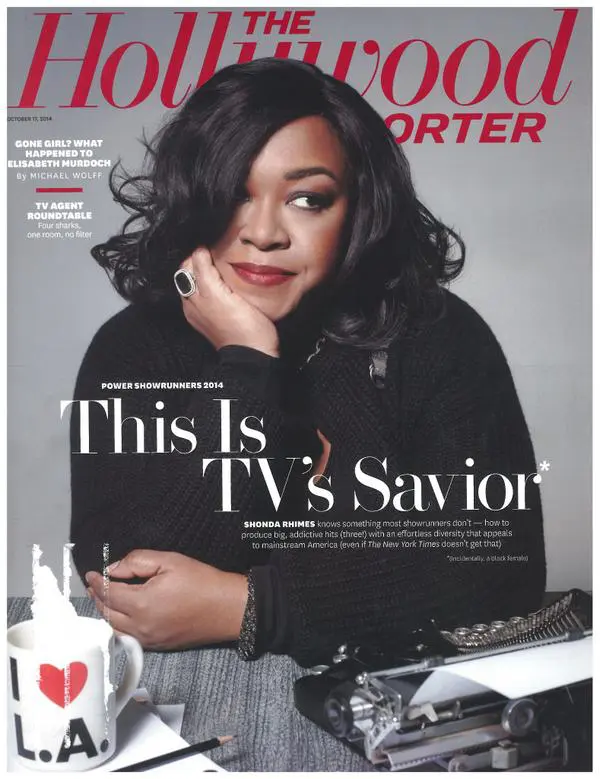
Rumor has it, Shonda Rhimes owns Thursday nights. The 44-year-old screenwriter, director, and producer is best known for her work on the medical series Grey’s Anatomy, political thriller series Scandal and now the legal series How to Get Away with Murder.
Covering the latest issue of The Hollywood Reporter, Shonda chats about race, gender and early lessons learned on Grey’s Anatomy. Check out a few of our favorite excerpts.
Being referred to as the most powerful black female showrunner in Hollywood:
They wouldn’t say that someone is ‘the most powerful white male showrunner in Hollywood.’…I find race and gender to be terribly important; they’re terribly important to who I am. But there’s something about the need for everybody else to spend time talking about it … that pisses me off.
On what positive resulted in the New York Times essay about Shonda by TV critic Alessandra Stanley:
Some really amazing articles were written that had the conversation that I’ve been trying to have for a very long time, which, coming from me, makes me sound like I’m just, ‘Rrrraw!’
Why she didn’t want the piece retracted:
In this world in which we all feel we’re so full of gender equality and we’re a postracial [society] and Obama is president, it’s a very good reminder to see the casual racial bias and odd misogyny from a woman written in a paper that we all think of as being so liberal.

Why she made her rounds, taking meetings outside of ABC, to assess her options:
It wasn’t really about money, though don’t get me wrong, it’s very important in a world in which women are paid 77 cents on the dollar to be paid in a way that felt correct. I wanted more control. I wanted the autonomy. And I wanted to feel like if I was making shows, I could sell them anywhere. I’m in a lovely position that whenever we pitch something, ABC buys it, which is great, but I also wanted the ability to say, ‘This is not for you.’
On Grey’s Anatomy getting off to a rocky start, in particular their displeasure with one of the scenes in an episode:
I think the term that was used to describe me to my face was, ‘If you think you’re funny, you’re sick.’ I was stunned.
Receiving constructive criticism from executives, about Grey’s early on:
I remember sitting there thinking to myself, ‘How much change can I make so that I still feel like I’m doing my show but also gets them the hell out of my editing room and [ensures] this never happens again?’
On her expectation for the people she works with:
I don’t put up with bullshit or nasty people. I don’t have time for it.
Follow me: @theJasmineBRAND on Twitter | theJasmineBRAND on Facebook | theJasmineBRAND on Instagram

 Previous Article
 Next Article
 23-Year-Old NYC Mom K!Iled, Baby Critically Injured After Dad Allegedly Pushes Them From 15th- Floor Balcony
  Nolan Wells, Teen Who Mysteriously D!ed In Mississippi, Friends Say They’ve Received B0mb & D3ath Thr3ats After No Charges Filed In His D3ath
  Autopsy Of Nolan Wells – Mississippi Teen Who Mysteriously D!ed While On A Boating Trip With People Believed To Be His Friends – Reveals No Water Was Found In His Lungs, Throat Or Stomach
 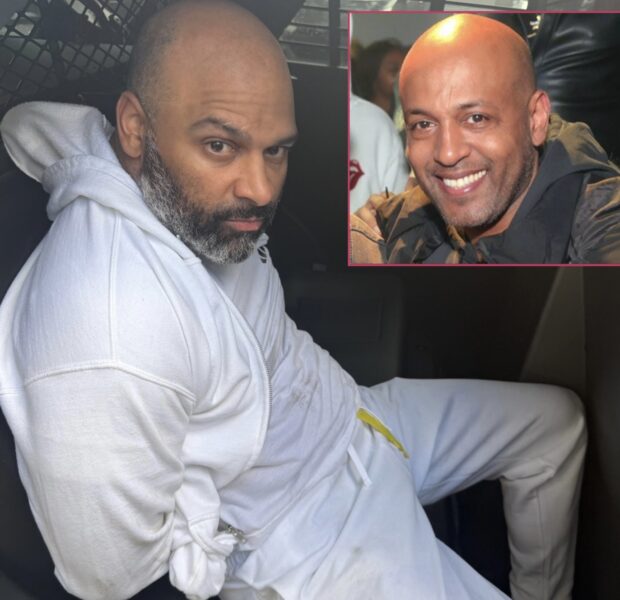 Atlanta Police ‘Top 10 Most Wanted’ Fug!tive Jonathan Soto Arr*sted In Connection With 2023 M*rder Of Nightclub Owner Michael Gidewon
  United Airlines Passenger Says She Had To Sit Next To Man Who Pleasured Himself While Staring At Her During Flight, Claims She Was Given Only $100 Travel Credit & Man Faced No Consequences
  Brittney Griner’s Estranged Wife Cherelle Seeks Financial Support, Says She Can’t Cover Monthly Bills Without Help
  BookTok Sensation Quan Millz, Author Of Viral Books Such As “This H*e Got Roaches In Her Crib” & “My Pastor Got A Stripper Pregnant,” Signs With Prominent Literary Agency Verve
  Washington D.C. Man Accused Of K*lling 2-Month-Old Twin Out Of Jealousy, Then Blaming His Nonverbal Autistic Son
Good for her.So proud to see someone standing for something while still earning a living.