



The RAP Act Bill, Which Aims To Ban Music Lyrics From Being Used As Court Evidence, Has Officially Reached Congress

The RAP Act Bill, Which Aims To Ban Music Lyrics From Being Used As Court Evidence, Has Officially Reached Congress
Just months after the ‘Rap Music on Trial’ bill passed the New York State Senate, the Restoring Artistic Protection Act has been introduced in the U.S. House of Representatives.
Back in January of this year, heavy-hitter musicians Jay-Z, Meek Mill, Fat Joe, Kelly Rowland, Big Sean, and Robin Thicke were some of many to show their support for a potential New York State law that would limit the use of song lyrics as evidence in court trials.
The restriction aims to mandate prosecutors to provide solid proof of the artist’s creative expression directly being linked to the criminal case in question.
When speaking on the bill, Fat Joe said:
“Our lyrics are a creative form of self-expression and entertainment – just like any other genre. We want our words to be recognized as art rather than being weaponized to get convictions in court. I hope the governor and all the lawmakers in New York take our letter into consideration, protect our artistic rights and make the right decision to pass this bill.”
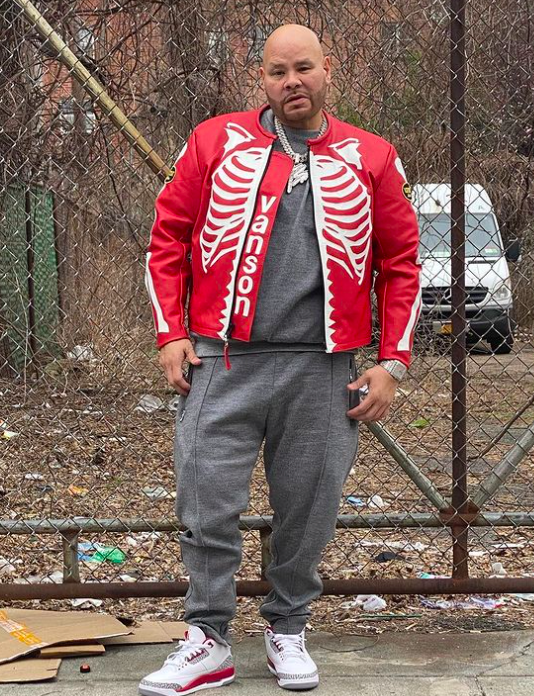
Fat Joe
Jay-Z’s attorney Alex Spiro and University of Richmond’s Professor Erik Nielson wrote a letter to the lawmakers, which read:
“Rather than acknowledge rap music as a form of artistic expression, police and prosecutors argue that the lyrics should be interpreted literally — in the words of one prosecutor, as ‘autobiographical journals’ — even though the genre is rooted in a long tradition of storytelling that privileges figurative language, is steeped in hyperbole, and employs all of the same poetic devices we find in more traditional works of poetry.”

Jay-Z
On Tuesday, May 17, ‘Rap Music On Trial’ (S.7527/A.8681) made success at the New York State Senate. Now, a bill by the name of Restoring Artistic Protection Act has reportedly reached Congress.
On Wednesday, July 27, the unprecedented bill was initiated by Congressmen Hank Johnson (D-GA) and Jamaal Bowman (D-NY) in the U.S. House of Representatives.
Johnson wrote in a recent tweet:
“Today [Congressman Jamaal Bowman] & I introduced RAP Act to protect artists from the wrongful use of their lyrics against them in criminal & civil proceedings. TY for support!”
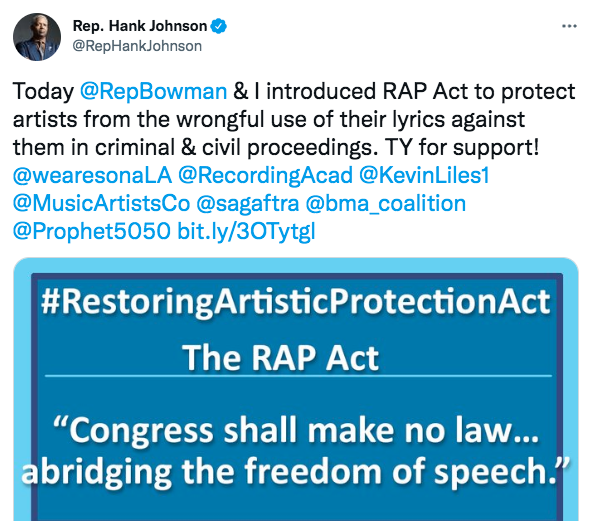
In a statement about the new act, Bowman added:
“Rap, Hip-Hop and every lyrical musical piece is a beautiful form of art and expression that must be protected. Evidence shows when juries believe lyrics to be rap lyrics, there’s a tendency to presume it’s a confession, whereas lyrics for other genres of music are understood to be art, not factual reporting. This act would ensure that our evidentiary standards protect the First Amendment right to freedom of expression. We cannot imprison our talented artists for expressing their experiences nor will we let their creativity be suppressed.”
The Restoring Artistic Protection Act happens in the wake of rappers Young Thug and Gunna’s RICO charges (Racketeer Influenced and Corrupt Organizations Act), where legal officials used lyrics from nine of Thug’s most popular songs in their court proceedings.
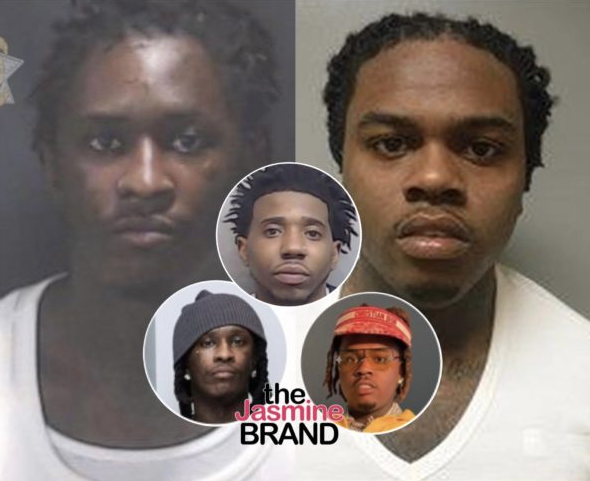
Young Thug, Gunna, YFN Lucci
What are your thoughts on this? Let us know in the comments below!

 Previous Article
 Next Article
 Ari Lennox Admits Her Business Moves Aren’t Attractive To Successful Men: ‘It Intimidates Them’
  Wu-Tang Clan Fans Offered Refunds After Method Man & Other Key Members Miss Tour Stops
  R&B Singer Mario Pens Heartfelt Message To His Son & Mother Of His Child: ‘It’s All God Giving Me The Experience I Missed As A Kid’
  NeNe Leakes, Phaedra Parks, & Flo Milli Guess The Gender Of Latto’s Baby; Latto Reveals What She’s Hoping For: We Both Want A Girl
  R. Kelly Would Beat Michael Jackson In A Verzuz Battle, Says Boosie
  Muni Long Says Ex Cut Off Her Phone During Breakup & She Lost Business Opportunities Before Regaining Old Number
  Kanye West Raps “White Queen” Line About Bianca Censori – Says It “Couldn’t Happen Without Martin Luther”
  TLC’s Chilli Allegedly Linked to Trump Donations – FEC Records Show Multiple Small Contributions